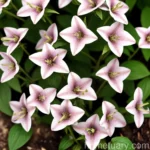
Plant Name: Black False Hellebore (Veratrum nigrum)
What is Black False Hellebore?
Black false hellebore, scientifically known as Veratrum nigrum, is a herbaceous perennial plant native to Europe and Asia. It is a member of the Melanthiaceae family and is often found in moist, woodland habitats. The plant is characterized by its striking dark green, lance-shaped leaves and tall spikes of small, clustered flowers.
Key Takeaways – Black False Hellebore (Veratrum nigrum)
Here are some key takeaways about the Black False Hellebore:
- Botanical Name: Veratrum nigrum
- Family: Melanthiaceae
- Native Habitat: Europe and Asia
- Growth Habit: Herbaceous perennial
- Foliage: Dark green, lance-shaped leaves
- Flowers: Small, clustered in tall spikes
Culture
Uses
Black false hellebore has been historically used for a variety of purposes, including:
- Medicinal uses
- Ethnobotanical uses
- Symbolism in folklore
The plant has also been studied for its potential landscaping and ornamental uses.
Growth Requirements
Water
Black false hellebore thrives in consistently moist soil. It is important to ensure adequate moisture, especially during the plant’s active growth periods.
Sunlight
The plant prefers partial to full shade, making it suitable for woodland gardens or shaded areas in the landscape.
Soil
Black false hellebore grows best in rich, well-draining soil with ample organic matter. Additionally, neutral to slightly acidic soil pH is optimal for its growth.
Fertilizer
A balanced, all-purpose fertilizer can be applied in spring to support healthy growth and flowering.
Pruning Techniques
Pruning of black false hellebore largely involves the removal of spent flower spikes and any damaged or diseased foliage. This can help promote overall plant health and appearance.
Propagation Methods
Black false hellebore can be propagated through division of the rhizomes or through seed germination. Both methods require careful attention to provide the best conditions for propagation success.
Container Gardening
Black false hellebore can be grown in containers, especially when provided with the right growing conditions and care. Choosing a large enough container with good drainage is essential for successful cultivation.
Common Diseases and Pest Control
Common Diseases
Black false hellebore may be susceptible to fungal diseases, including leaf spot and powdery mildew. It is important to monitor the plant for any signs of disease and take appropriate measures for control.
Pest Control
Pest control for black false hellebore involves monitoring for common garden pests such as aphids and slugs, which can be managed through appropriate pest control methods.
Botanist’s Tips
When cultivating black false hellebore, it is important to consider the following tips for successful growth and care:
- Provide adequate moisture, particularly during active growth phases.
- Choose a suitable location with partial to full shade for optimal growth.
- Regularly monitor for signs of disease or pest infestations.
- Prune the plant as needed to maintain its health and appearance.
Fun Facts
- Black false hellebore has been historically associated with symbolism in folklore, often linked to themes of protection and warding off evil spirits.
- The plant’s toxicity has also been of interest in various historical and traditional contexts.
Links to External Resources
For further information on black false hellebore, feel free to explore the following links:
- Veratrum nigrum: A Comprehensive Review on Its Traditional Uses, Phytochemistry, Pharmacological Activities and Toxicity
- The Cultural History and Ethnobotany of Veratrum in Western North America
- Native Plant Trust – Black False Hellebore
- Botanical Gazette – Veratrum nigrum
In conclusion, black false hellebore presents an intriguing botanical subject with diverse cultural, historical, and horticultural significance. From its traditional uses to its potential in landscaping, this plant offers a compelling exploration of both practical and symbolic aspects. Whether in the garden or as a subject of ethnobotanical study, black false hellebore continues to capture the interest of researchers, horticulturists, and enthusiasts alike.
NLP LSI Keywords
- Veratrum nigrum cultivation
- Black false hellebore care
- Growing Veratrum nigrum
- Veratrum nigrum in the garden
- Veratrum nigrum planting tips
- How to propagate black false hellebore
- Veratrum nigrum varieties
- Black false hellebore characteristics
- Veratrum nigrum medicinal uses
- Black false hellebore toxicity
- Veratrum nigrum folklore
- Black false hellebore folklore
- Veratrum nigrum traditional medicine
- Black false hellebore symbolism
- Veratrum nigrum poisonous properties
- Black false hellebore herbal remedies
- Veratrum nigrum growth requirements
- Black false hellebore landscape uses
- Veratrum nigrum perennial plant
- Black false hellebore flowering season
- Veratrum nigrum ornamental features
- Black false hellebore natural habitat
- Veratrum nigrum wildlife benefits
- Black false hellebore pollinators
- Veratrum nigrum pest control
- Black false hellebore diseases
- Veratrum nigrum garden design ideas
- Black false hellebore companion plants
- Veratrum nigrum hardiness zones
- Black false hellebore container gardening
- Veratrum nigrum landscape design
- Black false hellebore garden maintenance
- Veratrum nigrum soil requirements
- Black false hellebore water needs
- Veratrum nigrum sun exposure
- Black false hellebore pruning techniques
- Veratrum nigrum propagation methods
- Black false hellebore plant size
- Veratrum nigrum leaf characteristics
- Black false hellebore stem structure
- Veratrum nigrum flower anatomy
- Black false hellebore root system
- Veratrum nigrum seed germination
- Black false hellebore winter care
- Veratrum nigrum autumn foliage
- Black false hellebore spring growth
- Veratrum nigrum summer maintenance
- Black false hellebore natural dye properties
- Veratrum nigrum ethnobotanical uses
- Black false hellebore garden trends