Opuntia robusta (Silver Dollar Prickly Pear): A Comprehensive Guide to Care and Cultivation
Opuntia robusta, commonly known as the Silver Dollar Prickly Pear, is a striking and resilient succulent that is prized for its unique aesthetic and low maintenance requirements. This plant is native to regions of Mexico and the southwestern United States, where it thrives in arid and semi-arid environments. The Opuntia genus encompasses numerous species, many of which are cultivated for ornamental, culinary, and medicinal purposes.
In this comprehensive guide, we will delve into the intricacies of Opuntia robusta, exploring its cultural preferences, growth habits, and practical uses. Whether you are a seasoned horticulturist or a novice plant enthusiast, this article aims to equip you with the knowledge and skills necessary to cultivate and appreciate this captivating succulent.
Key Takeaways – Opuntia robusta (Silver Dollar Prickly Pear)
Before we embark on our exploration of Opuntia robusta, let’s outline the key takeaways that we will uncover in the subsequent sections of this guide:
- Culture: Understanding the natural habitat and growth patterns of Opuntia robusta.
- Uses: Exploring the diverse uses of Silver Dollar Prickly Pear in horticulture, landscaping, and beyond.
- Water: Uncovering the optimal watering practices for ensuring the health and vitality of Opuntia robusta.
- Sunlight: Determining the sunlight requirements that promote robust growth and flowering.
- Fertilizer: Choosing suitable fertilizers and application techniques to nourish Opuntia robusta.
- Soil: Identifying the ideal soil composition and structure for cultivating Silver Dollar Prickly Pear.
- Pruning: Learning the art of pruning and shaping Opuntia robusta to enhance its aesthetic appeal.
- Propagation: Exploring various methods for propagating Silver Dollar Prickly Pear, from seed to cuttings.
- Container Culture: Embracing container gardening and discovering the best practices for potted Opuntia robusta.
- Popularity: Understanding the growing popularity of Opuntia robusta in horticulture and landscaping.
Now, let’s embark on our journey of discovery, as we unravel the nuances of Opuntia robusta and gain a profound appreciation for this remarkable succulent.
What is Opuntia robusta (Silver Dollar Prickly Pear)?
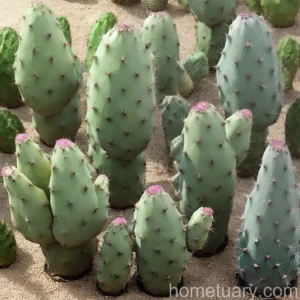
Opuntia robusta, also known as the Silver Dollar Prickly Pear, belongs to the Cactaceae family, which encompasses a diverse array of succulent plants characterized by their water-storing capabilities and often spiny or prickly exteriors. This particular species of Opuntia is recognized for its distinctive, flattened pads, commonly referred to as cladodes or nopales, which lend it a unique and eye-catching appearance.
Botanical Characteristics
Here are some key botanical features and characteristics of Opuntia robusta:
- Cladodes: The stems of Opuntia robusta are formed of flattened, oval to round pads, known as cladodes, which serve as the primary site for photosynthesis and water storage.
- Growth Habit: This succulent typically forms low, spreading colonies or clumps, with each pad capable of growing to several inches in length and width.
- Spines: While some varieties of Opuntia robusta may exhibit longer and more prominent spines, certain cultivars are prized for their reduced spines or entirely spineless nature.
- Flowers: In the appropriate growing conditions, Opuntia robusta produces vibrant, cup-shaped flowers that bloom in a range of colors, including shades of yellow, orange, and red.
- Fruits: Following the flowering period, Silver Dollar Prickly Pear develops fleshy, pear-shaped fruits that are edible in certain species and are valued for their culinary and medicinal properties.
Now that we have acquainted ourselves with the fundamental botanical attributes of Opuntia robusta, let’s delve deeper into the cultural requirements and optimal care practices essential for fostering the health and vitality of this captivating succulent.
Culture
Understanding the natural habitat and growth habits of Opuntia robusta is pivotal for providing the most conducive environment for its cultivation. The native range of Silver Dollar Prickly Pear encompasses arid and semi-arid regions of Mexico and the southwestern United States, where it thrives in sandy, well-draining soils and under the abundant sunlight characteristic of these locales.
Native Habitat
Opuntia robusta is indigenous to a variety of regions in Mexico, including parts of Sonora, Chihuahua, and Durango, as well as certain areas of the southwestern United States, such as Arizona and New Mexico. Within these landscapes, this succulent is frequently encountered in dry, rocky terrains, as well as desert scrub and foothill ecosystems.
Environmental Adaptations
The adaptability of Opuntia robusta to harsh and low-moisture environments is underscored by several physiological and anatomical adaptations, including:
- Water Storage: The specialized parenchymal cells within the cladodes of Silver Dollar Prickly Pear facilitate the storage of water, enabling the plant to endure extended periods of drought.
- Sun Tolerance: The presence of specialized photosynthetic pigments, such as chlorophyll and carotenoids, allows Opuntia robusta to thrive under intense sunlight, while also providing protection against ultraviolet radiation.
Through these inherent adaptations, Opuntia robusta has evolved to thrive in environments characterized by high temperatures, limited precipitation, and arid conditions. These adaptations have also contributed to the widespread cultivation of Silver Dollar Prickly Pear in xeriscapes, succulent gardens, and arid landscapes.
Growth Habits
In cultivation, Opuntia robusta exhibits several growth habits and characteristics that are reflective of its natural behavior in the wild. When provided with the appropriate growing conditions, this succulent is known to display the following growth attributes:
- Clump-Forming Nature: Opuntia robusta tends to form compact colonies or clumps, with each individual plant contributing to the overall structure and density of the grouping.
- Prolific Pads: Under favorable conditions, Silver Dollar Prickly Pear is capable of producing new pads at a relatively rapid rate, thereby contributing to the expansion and densification of the plant.
- Flowering Behavior: With sufficient sunlight and warmth, Opuntia robusta will initiate a flowering phase, during which it produces showy, cup-shaped blooms that add a vibrant and ornamental dimension to the plant.
Uses
The utilization of Opuntia robusta extends beyond its ornamental appeal, encompassing a broad spectrum of practical applications in horticulture, landscaping, culinary endeavors, and folk medicine. The multifaceted nature of Silver Dollar Prickly Pear and its various uses underscore its significance as a valuable and versatile succulent.
Horticulture and Landscaping
Within the realm of horticulture and landscape design, Opuntia robusta is valued for its aesthetic appeal, resilience, and adaptability to arid environments. As a result, it is frequently employed in the following capacities:
- Xeriscaping: Opuntia robusta is a favored candidate for xeriscaping projects, where it adds visual interest and requires minimal irrigation, making it well-suited for water-wise landscaping.
- Succulent Gardens: The unique appearance and low-maintenance requirements of Silver Dollar Prickly Pear render it an ideal choice for succulent gardens and rockeries, where it can thrive alongside other arid-adapted plants.
- Ornamental Accent: Whether grown in containers or within the landscape, Opuntia robusta serves as an eye-catching ornamental accent, particularly when it is in bloom or during the fruiting season.
Culinary Uses
The culinary potential of Opuntia robusta, particularly in relation to its fleshy fruits and tender pads, has been recognized and celebrated in various culinary traditions. Common culinary applications include:
- Prickly Pear Fruits: The fruits of certain Opuntia species, including Opuntia robusta, are edible and are utilized in the preparation of jams, jellies, syrups, and beverages, imparting a unique and refreshing flavor.
- Nopales: The young cladodes or pads of Silver Dollar Prickly Pear, known as nopales, are commonly incorporated into Mexican and Southwestern cuisine, where they are prized for their tender texture and slightly tangy flavor.
Medicinal and Nutritional Significance
Opuntia robusta possesses several notable medicinal and nutritional attributes, which have been acknowledged in folk medicine and modern scientific research. These include:
- Antioxidant Properties: The fruits and pads of Silver Dollar Prickly Pear contain high levels of antioxidants, including vitamin C and various flavonoids, contributing to their potential health benefits.
- Blood Sugar Regulation: Studies have indicated that certain compounds present in Opuntia species may assist in regulating blood sugar levels, thereby holding potential implications for managing diabetes.
- Digestive Health: Nopales are recognized for their dietary fiber content and prebiotic effects, which may confer benefits for gastrointestinal health and digestion.
Through these diverse applications, Opuntia robusta assumes a multifaceted role within horticulture, cuisine, and traditional medicine, underscoring its cultural, ecological, and nutritional significance.
Water
The water requirements of Opuntia robusta are fundamentally influenced by its natural adaptation to arid environments, where it has evolved mechanisms to withstand prolonged periods of drought. Understanding and replicating these water-related adaptations is crucial for promoting the health and vigor of this resilient succulent.
Watering Practices
When it comes to watering Opuntia robusta, several fundamental principles and best practices should be borne in mind to ensure the optimal water management for this succulent. Key considerations include:
- Infrequent Watering: Given its native habitat in arid regions, Silver Dollar Prickly Pear is adapted to infrequent watering and prolonged periods of dryness.
- Well-Drained Soil: It is essential to cultivate Opuntia robusta in well-draining soil to prevent waterlogging, which can lead to root rot and other detrimental conditions.
Watering Frequency
The frequency of watering for Opuntia robusta should be guided by the following principles:
- Seasonal Variations: During the active growing season, typically from spring through early fall, periodic watering may be necessary, particularly in regions with prolonged periods of drought and excessive heat.
- Winter Dormancy: In the winter months, when growth slows or ceases, Silver Dollar Prickly Pear is generally able to withstand extended periods without supplemental irrigation, provided that the soil is well-drained and consistently dry.
Signs of Water Stress
As with many succulent plants, it is important to remain attuned to the visual and physiological cues that may indicate inadequate or excessive watering for Opuntia robusta. Signs of water stress include:
- Shriveling Pads: Underwatered plants may exhibit puckering or deflation of their cladodes, signaling a need for moisture.
- Yellowing or Drop of Pads: Overly saturated soil can lead to root suffocation and subsequent yellowing or drop of pads, a symptom known as rot.
By maintaining a mindful and balanced approach to watering, it is possible to sustain the health and resilience of Opuntia robusta, ensuring its flourishing in both the garden and in containers.
Sunlight
As an arid-adapted succulent, Opuntia robusta is dependent on ample sunlight to drive its physiological processes, promote growth, and stimulate flowering. Understanding the sunlight requirements of Silver Dollar Prickly Pear is vital for ensuring optimal health and vigor.
Sun Exposure
In its natural habitat and in cultivation, Opuntia robusta displays a propensity for thriving under direct sunlight, owing to its evolutionary adaptations to harsh and sun-drenched environments. In the context of horticulture and landscaping, the following principles should be considered with regard to sun exposure:
- Full Sun: Silver Dollar Prickly Pear is best cultivated in locations that receive ample sunlight, typically defined as a minimum of six to eight hours of direct sun exposure per day.
- Shade Tolerance: While Opuntia robusta excels in full sun, it also demonstrates a degree of tolerance for partial shade, particularly in regions characterized by intense heat and solar radiation.
Optimal Light Conditions
By adhering to the following guidelines, it is possible to provide the optimal light conditions for fostering the growth and blooming of Opuntia robusta:
- Southern Exposure: In temperate regions, positioning Opuntia robusta in a southern exposure will ensure that it receives the greatest intensity and duration of sunlight.
- Avoiding Obstructions: To maximize sunlight exposure, placement in areas with minimal obstructions, such as buildings or tall vegetation, is recommended.
In summary, the ample provision of sunlight, along with the accompanying warmth and light energy, is imperative for the successful cultivation of Opuntia robusta, allowing it to exhibit its inherent beauty and vitality to the fullest extent.
Fertilizer
While Opuntia robusta is renowned for its capacity to thrive in nutrient-poor soils, judicious fertilization can play a beneficial role in promoting growth, enhancing flowering, and bolstering the overall health of this succulent. By understanding the principles of fertilization and adhering to appropriate application techniques, it is possible to optimize the potential of Silver Dollar Prickly Pear.
Fertilization Principles
Despite the perceived hardiness and resilience of Opuntia robusta, certain principles of fertilization should guide the application of nutrients to this succulent:
- Moderation: Given its adaptation to low-nutrient environments, Opuntia robusta is best fertilized sparingly, with a focus on providing essential macro and micronutrients in a balanced manner.
- Seasonal Adjustments: Fertilizer application should be tailored to the growing season, with greater emphasis on supplementary nutrients during the active growth phase, typically from spring through summer.
Suitable Fertilizers
The selection of appropriate fertilizers for Opuntia robusta should prioritize those that align with the succulent’s preferences for lean and well-draining soils. Suitable options include:
- Balanced Fertilizers: Water-soluble, balanced fertilizers formulated for cacti and succulents provide essential nutrients without the risk of salt accumulation.
- Organic Amendments: Natural products, such as compost or well-aged manure, can serve as organic alternatives for enriching the soil while enhancing microbial activity.
Fertilization Regimen
When establishing a fertilization regimen for Opuntia robusta, it is beneficial to adhere to the following guidelines:
- Annual Application: A single application of fertilizer at the beginning of the growing season can provide a sustained nutrient supply for Silver Dollar Prickly Pear throughout the year.
- Dilution and Frequency: Diluting fertilizers to half or quarter strength is advisable, with a frequency of application of once every four to six weeks during the growing season.
By integrating prudent fertilization practices into the care regimen for Opuntia robusta, it is possible to augment the growth, resilience, and ornamental characteristics of this captivating succulent, while ensuring a sustainable and healthy cultivation approach.
Soil
The soil in which Opuntia robusta is cultivated plays a pivotal role in shaping the plant’s growth, health, and overall performance. Given its natural adaptation to arid and rocky terrains, Silver Dollar Prickly Pear thrives in lean, well-draining soils that replicate the conditions of its native habitat.
Ideal Soil Composition
The ideal soil composition for cultivating Opuntia robusta should embody several key characteristics that align with the succulent’s natural preferences:
- Porosity: Well-draining soils, characterized by high porosity, enable excess moisture to escape swiftly, preventing waterlogged conditions that are detrimental to succulents.
- Mineral Content: Sandy or gravelly substrates, with a lower organic matter content, reflect the lean and mineral-rich soils that are favored by Opuntia robusta in the wild.
pH and Alkalinity
The pH and alkalinity of the soil can exert a profound influence on the growth and nutrient uptake of Opuntia robusta. Considerations regarding pH and alkalinity include:
- Neutral to Alkaline pH: Silver Dollar Prickly Pear thrives in soils with a slightly alkaline to neutral pH range, typically falling within the 6.5 to 8.0 range.
- Calcium Availability: The presence of ample calcium in the soil is conducive to the growth of Opuntia robusta, underpinning the development and stability of its cladodes and overall plant structure.
Soil Amendments
To enhance the quality of the soil for cultivating Opuntia robusta, the following soil amendments and improvement techniques may be employed:
- Perlite or Pumice: Incorporating perlite or pumice into the soil mix can improve aeration and drainage, aiding in the prevention of waterlogged conditions.
- Grit and Gravel: The addition of coarse sand, grit, or gravel contributes to the creation of a lean and well-draining substrate that mimics the natural habitat of Silver Dollar Prickly Pear.
With a focus on replicating the lean and porous soils characteristic of its native range, the establishment of an optimal soil environment is integral to the successful cultivation of Opuntia robusta, fostering its resilience, vigor, and ornamental appeal.
Pruning
Pruning is an essential component of Opuntia robusta care, serving to maintain the plant’s shape, promote rejuvenation, and prevent overcrowding. By understanding the principles of pruning and adhering to appropriate techniques, it is possible to optimize the aesthetic and horticultural potential of Silver Dollar Prickly Pear.
Pruning Objectives
The objectives of pruning Opuntia robusta are multifaceted, encompassing several key aims that guide the implementation of pruning practices:
- Aesthetic Maintenance: Regular pruning helps to retain the desired shape and form of Silver Dollar Prickly Pear, preventing it from becoming unkempt or sprawling.
- Rejuvenation: Removing aged or senescent pads encourages the production of new growth and enhances the overall vigor of the plant.
- Space Management: Pruning aids in controlling the spread and density of Opuntia robusta, preventing overcrowding and maintaining suitable spacing between individual plants.
Pruning Techniques
When engaging in the pruning of Opuntia robusta, it is crucial to adopt the following techniques and precautions to ensure optimal outcomes and minimize the risk of injury:
- Sanitization: Sterilizing pruning tools with alcohol or a diluted bleach solution helps to prevent the transmission of diseases and pathogens between plants.
- Minimal Disturbance: Pads should be pruned with care and precision, minimizing damage to adjacent tissue and ensuring clean, straight cuts that facilitate swift healing.
Seasonal Considerations
The timing of pruning for Opuntia robusta should be informed by the following seasonal considerations to maximize the benefits and minimize potential stress:
- Post-Flowering Pruning: Following the completion of the flowering phase, clusters of spent flowers and any damaged or withered pads can be pruned to maintain the plant’s vitality and aesthetic appeal.
- Overwintering Pruning: During the winter dormancy period, minimal pruning may be conducted to address any frost damage or to enhance the aesthetic form of Silver Dollar Prickly Pear.
By integrating strategic and mindful pruning practices into the care regimen for Opuntia robusta, it is possible to perpetuate the health, vigor, and ornamental allure of this distinctive succulent, contributing to its longevity and beauty in the garden landscape.
Propagation
The propagation of Opuntia robusta is