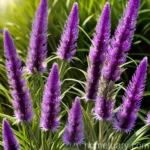
What is Liatris spicata ‘Floristan Violet’ (Gayfeather)?
Liatris spicata, commonly known as Gayfeather or Blazing Star, is a perennial plant species that belongs to the Asteraceae family. The ‘Floristan Violet’ variety is known for its striking violet-purple flower spikes that add a vibrant pop of color to a garden or landscape. This native North American plant is a favorite among gardeners and landscaping enthusiasts for its aesthetic appeal and its ability to attract pollinators.
Key Takeaways – Liatris spicata ‘Floristan Violet’ (Gayfeather)
- Liatris spicata ‘Floristan Violet’ is a stunning perennial plant known for its violet-purple flower spikes.
- This plant attracts pollinators such as butterflies and bees, making it a valuable addition to pollinator-friendly gardens.
- ‘Floristan Violet’ is low-maintenance and adaptable, making it suitable for various landscaping and garden settings.
- It thrives in full sunlight and well-drained soil, and it can be grown in containers as well.
Culture
Uses
Liatris spicata ‘Floristan Violet’ is highly valued for its ornamental value in gardens, landscapes, and floral arrangements. Its vibrant flower spikes make it a popular choice for adding color and visual interest to mixed perennial beds, borders, and wildflower meadows. The plant also serves as a valuable source of nectar for pollinators, supporting the overall biodiversity of an ecosystem.
Water
Gayfeather plants prefer well-drained soil and do not tolerate waterlogged conditions. While they are relatively drought-tolerant once established, they benefit from regular watering, especially during dry periods. It is essential to avoid overwatering, as excessive moisture can lead to root rot and other issues.
Sunlight
For optimal growth and flowering, Liatris spicata ‘Floristan Violet’ requires full sunlight. It thrives in locations with at least six to eight hours of direct sunlight per day. Insufficient sunlight may result in leggy growth and reduced flowering.
Fertilizer
Minimal fertilizer is usually required for Liatris spicata ‘Floristan Violet.’ A balanced, slow-release fertilizer applied in early spring can support the plant’s growth and blooming performance. It is important to follow the recommended application rates to prevent overfertilization, which can be detrimental to the plant.
Soil
Gayfeather plants thrive in well-drained, moderately fertile soil with a slightly acidic to neutral pH range. Sandy or loamy soils are ideal, as they promote proper drainage and aeration. Heavy clay soils should be amended with organic matter to improve drainage.
Pruning
Pruning is generally not necessary for Liatris spicata ‘Floristan Violet.’ However, removing spent flower spikes after the blooming period can promote a tidier appearance and prevent self-seeding in the garden. Pruning can be done by cutting the flower stalks down to the base of the plant using clean, sharp pruners.
Propagation
Gayfeather plants can be propagated through division or seed sowing. Dividing the plant’s rhizomes in early spring or late fall allows for the creation of new plants. Additionally, collecting and sowing ripe seeds in the fall can result in new seedlings that will establish themselves in the following growing season.
Container Popularity
Liatris spicata ‘Floristan Violet’ is well-suited for container gardening, adding vertical interest and color to patio areas, balconies, and outdoor living spaces. Its compact growth habit makes it an excellent choice for containers of various sizes, and it can be combined with other perennials and annuals to create visually appealing mixed plantings.
Container
When selecting a container for Gayfeather plants, opt for a pot with drainage holes to prevent waterlogging. Choosing a container with a diameter of at least 12 inches provides ample space for the plant’s roots to spread and grow. Use a well-draining potting mix formulated for perennial plants to ensure the plant’s health and vitality in a container setting.
Common Diseases
Liatris spicata ‘Floristan Violet’ is generally resistant to many common plant diseases when grown in suitable cultural conditions. However, certain environmental factors or cultural practices can predispose the plant to the following issues:
Common Disease Diagnosis
- Powdery Mildew: A fungal disease that manifests as a powdery, white substance on the plant’s foliage. It can be managed by improving air circulation and avoiding overhead watering.
- Root Rot: Caused by overly wet or waterlogged soil, leading to decay of the plant’s root system. To prevent this, ensure proper drainage and avoid excessive watering.
Common Pests
Gayfeather plants are relatively resistant to pests, but they may occasionally encounter the following:
- Aphids: Small, sap-sucking insects that can be removed with a strong stream of water or treated with insecticidal soap if necessary.
- Spider Mites: These pests can be deterred by regularly misting the plant’s foliage to increase humidity and using insecticidal sprays if infestations occur.
Botanist’s Tips
- Plant Liatris spicata ‘Floristan Violet’ in well-drained soil and provide ample sunlight for optimal growth and flowering.
- Consider incorporating this plant into pollinator-friendly gardens to attract and support beneficial insect populations.
- When growing Gayfeather in containers, ensure proper drainage and use a high-quality potting mix to promote healthy growth.
- To extend the blooming period, deadhead the spent flower spikes as they fade to encourage new blooms.
- Monitor for signs of potential pest or disease issues, and take proactive measures to address any problems early on.
Fun Facts
- The species name “spicata” refers to the characteristic spike-shaped inflorescence of the plant, which is a defining feature of Liatris species.
- Gayfeather plants are known to attract a variety of pollinators, including butterflies, bees, and hummingbirds, enhancing the biodiversity of garden environments.
Links to External Resources
- National Gardening Association – Liatris spicata ‘Floristan Violet’
- USDA – Plants Database: Liatris spicata
By exploring the various aspects of Liatris spicata ‘Floristan Violet’, or Gayfeather, we gain a comprehensive understanding of its characteristics, care requirements, and potential uses in garden and landscaping settings. Whether cultivated for its vibrant blooms, role in supporting pollinator populations, or suitability for container gardening, this versatile plant offers a range of benefits and possibilities for plant enthusiasts and nature lovers alike.