Japanese Holly (Ilex crenata ‘Geisha’): A Complete Guide to Care and Cultivation
When it comes to creating visually appealing landscapes and garden designs, the inclusion of evergreen hollies is often a top choice for many gardeners. Among the diverse range of holly species available, the Japanese holly, scientifically known as Ilex crenata ‘Geisha,’ stands out with its unique features and versatile landscape uses. This comprehensive guide delves into the various aspects of nurturing and utilizing the Japanese holly in diverse settings, complete with detailed information on culture, uses, maintenance, and more. Whether you are an experienced horticulturist or a novice gardener, this guide will equip you with the knowledge and insights needed to care for and optimize the aesthetic potential of the Japanese holly in your outdoor spaces.
What is Japanese Holly (Ilex crenata ‘Geisha’)?
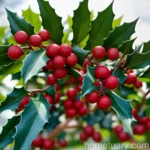
The Japanese holly, or Ilex crenata ‘Geisha,’ is an evergreen shrub that belongs to the family Aquifoliaceae. This plant species is a native of East Asia, including Japan, Korea, and China. It is cherished for its dense, small, glossy, dark-green leaves and black berries, making it a popular choice for ornamental and landscape plantings.
Key Takeaways – Japanese Holly (Ilex crenata ‘Geisha’)
- Scientific Name: Ilex crenata ‘Geisha’
- Common Name: Japanese holly
- Plant Type: Evergreen shrub
- Growth Habit: Compact, rounded
- Foliage: Small, glossy, dark-green leaves
- Flowers: Small, white blooms in spring
- Berries: Black, round fruit
- Hardiness Zones: 6-8
- Mature Height: 3-4 feet
- Exposure: Full sun to partial shade
- Soil Preference: Well-drained, acidic soil
- Watering: Moderate
Culture
Uses
-
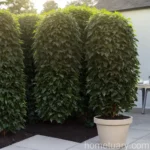
Landscape Ornament: Ilex crenata ‘Geisha’ serves as an excellent choice for creating elegant garden borders, hedges, and formal or informal evergreen foundations.
-
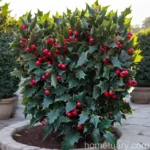
Topiary and Containers: Due to its dense foliage and compact growth habit, it is well-suited for use in topiaries and container plantings, adding an element of sophistication to any outdoor setting.
-
Japanese Gardens: Its refined appearance makes it a popular inclusion in traditional Japanese gardens, enriching the tranquil and serene ambiance these gardens are known for.
-
Bonsai: Japanese holly, with its small leaves and adaptability to pruning, is also a favored species for bonsai cultivation, contributing to the artful creations of miniature trees.
-
Wildlife Habitat: The berries of the Japanese holly attract birds, adding to its ecological value as a wildlife-friendly plant.
Water
Japanese holly generally requires moderate watering, with the specific needs varying based on the growth stage, weather conditions, and soil moisture levels. It is essential to ensure that the plant’s root zone does not become waterlogged, as this can lead to root rot and other issues. Optimal soil moisture levels can be determined by conducting regular checks and adjusting the watering frequency as needed.
Sunlight
Ilex crenata ‘Geisha’ thrives in a location with full sun to partial shade. It is important to strike a balance to avoid excessive exposure to harsh sunlight, which can potentially lead to leaf scorch, especially in regions with intense summer heat. In contrast, insufficient light can hinder the plant’s growth and overall vigor.
Fertilizer
To maintain the health and vitality of Japanese holly, it is beneficial to provide a balanced fertilizer during the active growing season, typically in late winter or early spring. Selecting a fertilizer specifically formulated for acid-loving plants is advisable, as this will cater to the plant’s preference for acidic soil conditions.
Soil
Japanese holly prefers well-drained, slightly acidic soil with a pH level ranging between 5.0 to 6.5. Amending the soil with organic matter can aid in enhancing its structure and fertility, promoting healthier growth and resilience to environmental stressors.
Pruning
Regular pruning is essential to maintain the desired shape and size of the Japanese holly, especially when utilized for formal hedges or topiary designs. The best time for pruning is generally in late winter to early spring before new growth emerges. It is important to use sharp and sterile pruning tools to make clean cuts without causing unnecessary damage to the plant.
Propagation
Propagation of Ilex crenata ‘Geisha’ can be accomplished through methods such as semi-hardwood cuttings, seeds, or layering. Each approach has its unique advantages and considerations, with the selection of the most suitable method often depending on the specific circumstances and resources available.
Container Popularity
Given its compact growth habit and adaptability to container cultivation, Japanese holly is a favored choice for adorning outdoor living spaces, patios, and entryways in containers. The plant’s versatility in container gardening allows for the creation of stunning focal points and enduring ornamental displays throughout the year.
Common Diseases
Disease Diagnosis
-
Leaf Spot: Leaf spot diseases may manifest as dark or discolored spots on the leaves, often caused by various fungal pathogens. Proper sanitation and adequate air circulation can contribute to minimizing the risk of leaf spot diseases.
-
Powdery Mildew: Powdery mildew can occur in humid conditions, leading to a powdery white growth on the foliage. Providing adequate spacing between plants and promoting good air circulation are effective preventive measures against this fungal disease.
-
Root Rot: Overly moist or waterlogged soil can encourage the development of root rot, posing a threat to the plant’s root system and overall health. Monitoring soil moisture levels and ensuring proper drainage can aid in preventing root rot.
Common Pests
-
Scale Insects: These pests may infest the Japanese holly, appearing as small, immobile bumps on the stems and leaves. Effective control measures involve the use of horticultural oils or insecticidal soaps to target and eradicate the scale insects.
-
Spider Mites: Spider mites, characterized by the presence of webbing and stippled leaves, are known to attack Japanese holly, often thriving in dry and dusty environments. Regularly misting the foliage and employing natural predators, such as predatory mites, can aid in managing spider mite infestations.
These are just a few examples of the potential diseases and pests that may affect Japanese holly. Vigilance and timely interventions are essential in maintaining the plant’s health and preventing issues from escalating.
Botanist’s Tips
-
Maintain Adequate Air Circulation: Proper air circulation is crucial for preventing common fungal diseases, and it can also contribute to enhancing the overall vigor and resilience of the plant.
-
Monitor Soil Moisture: Regularly inspect the soil moisture levels and ensure that the plant’s roots do not experience prolonged waterlogging, as this can lead to various issues, including root rot.
-
Prune with Precision: When pruning Japanese holly, exercise care and precision to achieve the desired shape and maintain the plant’s health. Utilize clean and sharp pruning tools to minimize the risk of causing damage to the plant.
-
Encourage Wildlife: The berries produced by Japanese holly can attract birds, contributing to the ecological value of the plant and adding a dynamic element to the garden ecosystem.
Fun Facts
-
Japanese holly has been used traditionally in East Asia for medicinal purposes, with its leaves and berries believed to possess various health-promoting properties.
-
The dense foliage of Ilex crenata ‘Geisha’ contributes to its versatility in Japanese garden designs, offering an array of creative possibilities for incorporating this plant species into tranquil and artful settings.
Links to External Resources
For further information on Japanese holly (Ilex crenata ‘Geisha’) and related topics, explore the following resources:
- The American Holly Society
- Royal Horticultural Society – Japanese Hollies
- University of Florida IFAS Extension – Holly Culture
In conclusion, Japanese holly (Ilex crenata ‘Geisha’) embodies a blend of aesthetic appeal and functional versatility, making it a valuable asset in diverse horticultural settings. By understanding and implementing the recommended cultural practices, horticulturists and gardening enthusiasts can harness the full potential of Ilex crenata ‘Geisha,’ creating captivating landscapes and providing ecological support for wildlife. With its glossy foliage, compact growth habit, and adaptability to various landscape uses, the Japanese holly stands as a captivating botanical specimen that enriches outdoor spaces with enduring beauty and ecological significance.