

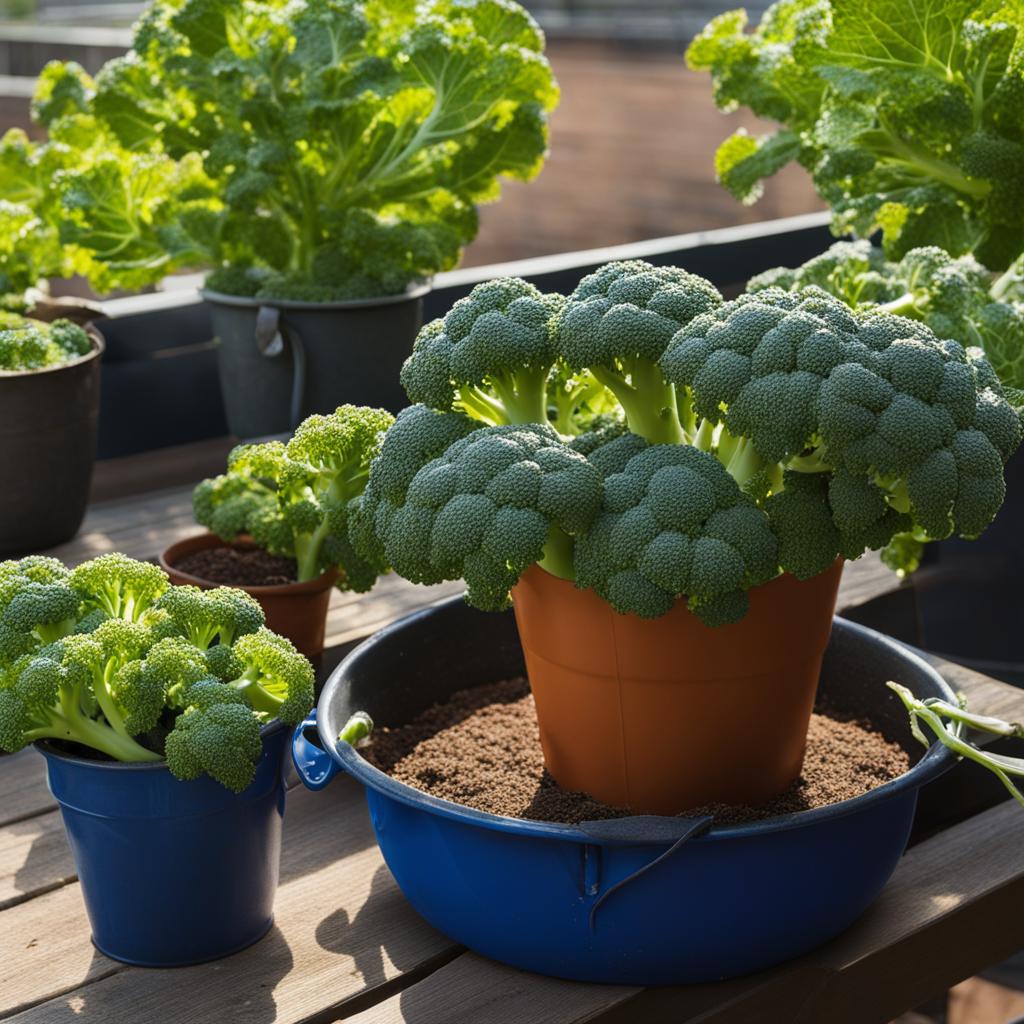
Hey there, fellow green thumbs! Today, I want to share with you my tried and tested method for growing broccoli in pots. Whether you have a small balcony or a cozy patio, container gardening is a fantastic way to cultivate this nutritious vegetable right at home. So, grab your gardening gloves and let’s dive in!
Key Takeaways:
- Container gardening makes growing broccoli accessible to those with limited space.
- Choose a pot that is at least 12 inches deep and has proper drainage holes.
- Use a well-draining potting mix with organic matter for optimal growth.
- Start broccoli plants from seeds or purchase transplants from nurseries.
- Provide adequate sunlight, water, and fertilization for healthy broccoli plants.
Benefits of Growing Broccoli in Containers
Growing broccoli in containers offers numerous benefits, making it an ideal option for those with limited gardening space. Container gardening allows you to cultivate broccoli in small areas such as balconies, patios, or rooftops, making it accessible to urban and suburban dwellers. It provides the opportunity to enjoy the satisfaction of homegrown vegetables without requiring a large backyard.
One of the advantages of growing broccoli in pots is the increased control over soil conditions and nutrients. By using high-quality potting mix rich in organic matter, you can create an optimal growing environment for your plants. Furthermore, container gardening allows you to adjust the watering and sunlight exposure to suit the specific needs of broccoli, resulting in healthier plants and better yields.
In addition, managing pests and diseases becomes easier when growing broccoli in pots. Containers provide a physical barrier, reducing the risk of pests reaching your plants. You can also closely monitor your broccoli for any signs of infestation or disease, allowing for swift and targeted action. Overall, container gardening offers a convenient and efficient way to grow broccoli, even in small spaces.
Benefits of Growing Broccoli in Containers:
- Accessible for small space gardening
- Control over soil conditions and nutrients
- Adjustable watering and sunlight exposure
- Easier management of pests and diseases
With these advantages in mind, growing broccoli in containers is a practical and rewarding choice for any gardener. Next, we will delve into choosing the right pot and soil for broccoli, ensuring you have the essential foundation for successful container gardening.
Choosing the Right Pot and Soil for Broccoli
When it comes to growing broccoli in pots, selecting the appropriate pot size and soil is crucial for the success of your plants. The right pot size ensures that your broccoli has enough space to develop a healthy root system and allows for proper drainage. A pot that is at least 12 inches deep is recommended to accommodate the growth of the broccoli plants.
In terms of soil, using a well-draining potting mix is essential. This type of soil allows excess water to escape and helps prevent waterlogging, which can lead to root rot. Opt for a potting mix that is rich in organic matter as it provides essential nutrients for the broccoli plants. Additionally, broccoli prefers slightly acidic soil with a pH level between 6.0 and 7.0.
To improve the fertility of your soil, consider adding compost or aged manure. These organic amendments enhance soil structure, provide nutrients, and promote healthy plant growth. By choosing the right pot and soil for your broccoli, you create an optimal environment for your plants to thrive and produce a bountiful harvest.
The Importance of Pot Size and Soil for Broccoli
| Pot Size | Soil |
|---|---|
| At least 12 inches deep | Well-draining potting mix |
| Slightly acidic with a pH level between 6.0 and 7.0 | |
| Rich in organic matter for nutrients |
“Choosing the right pot size and soil is crucial for successful container gardening of broccoli. A pot that is at least 12 inches deep provides ample space for root development, while a well-draining potting mix with slightly acidic soil ensures optimal growth.” – Jodi Torpey
Starting Broccoli Seeds or Transplants
Growing broccoli in pots requires careful consideration of the starting method for your plants. There are two options to choose from: starting from seeds or using transplants. The choice depends on your preference and the availability of resources.
If you decide to start from seeds, it’s best to begin indoors about 6-8 weeks before the last frost date in your area. Fill seed trays or small pots with a seed-starting mix and sow the broccoli seeds according to the package instructions. Keep the soil consistently moist and provide sufficient light for germination. Once the seedlings have developed a couple of true leaves, you can transplant them into larger pots.
For those who prefer a head start, transplants are a convenient option. You can purchase broccoli seedlings from nurseries or garden centers. When choosing transplants, look for healthy plants with sturdy stems and vibrant foliage. When you bring them home, gently loosen the root ball and transplant the seedlings into your prepared pots. Water them thoroughly to help them establish in their new environment.
Whether you choose to start from seeds or use transplants, remember that broccoli plants require consistent care and attention. Water them regularly, provide adequate sunlight, and monitor for any signs of pests or diseases. By starting your broccoli seeds or transplants in pots, you’ll be on your way to growing delicious and nutritious broccoli right at home.
Tips for Starting Broccoli Seeds:
- Sow the seeds indoors 6-8 weeks before the last frost date.
- Use a seed-starting mix and keep the soil consistently moist.
- Provide sufficient light for germination.
- Transplant the seedlings into larger pots once they have a couple of true leaves.
Tips for Using Broccoli Transplants:
- Choose healthy seedlings with sturdy stems and vibrant foliage.
- Loosen the root ball and transplant the seedlings into prepared pots.
- Water the transplants thoroughly to help them establish in their new environment.
Tips for Growing Broccoli in Pots
When it comes to growing broccoli in containers, there are a few essential tips that can help you achieve success. Here are some steps to grow broccoli in containers and container gardening tips for broccoli:
1. Choose the Right Pot Size
Broccoli plants have deep root systems, so it’s important to select a pot that is at least 12 inches deep. This will provide enough space for the roots to grow and develop properly. Additionally, choose a pot that has drainage holes to prevent waterlogging, which can lead to root rot.
2. Use Well-Draining Potting Mix
Ensure your potting mix is well-draining to prevent water from sitting around the roots. A mix that is rich in organic matter is ideal for growing broccoli. You can add compost or aged manure to the mix to improve its fertility and provide the necessary nutrients for your plants.
3. Provide Adequate Sunlight
Place your pots in a location that receives at least six hours of direct sunlight per day. Broccoli plants thrive in full sun, so make sure they’re getting enough light to promote healthy growth and development. If you don’t have a sunny spot, consider using grow lights to supplement the natural sunlight.
4. Water and Fertilize Regularly
Water your broccoli plants deeply at least once a week, allowing the soil to dry out slightly between waterings. This will help prevent overwatering and ensure the plants receive adequate moisture. Additionally, apply a balanced fertilizer every 4-6 weeks to provide essential nutrients for optimal growth.
By following these tips and steps, you can successfully grow broccoli in pots and enjoy a bountiful harvest of this nutritious vegetable. With the right care and attention, container gardening can be a rewarding experience, even in small spaces.

Pruning and Supporting Broccoli Plants
As your broccoli plants grow, it’s important to provide them with proper care and support to ensure optimal growth and a successful harvest. Pruning and supporting your container-grown broccoli plants can help promote airflow, prevent disease, and keep the plants upright.
Pruning is an essential practice for maintaining the health and vigor of your broccoli plants. Remove any yellowing or damaged leaves regularly to improve air circulation around the plants. This will help prevent the spread of diseases and ensure that your plants stay healthy and productive.
If your broccoli plants start to lean or become top-heavy as they grow, providing support is necessary to prevent them from toppling over. Stakes or trellises can be used to support the plants and keep them upright. Gently tie the main stem of each plant to the stakes or trellises using soft plant ties or twine.
Supporting your broccoli plants not only prevents damage but also promotes more efficient growth and larger heads. By keeping the plants upright, you allow for better access to sunlight, which is essential for photosynthesis and the development of healthy, robust broccoli heads. Additionally, supporting the plants helps reduce the risk of branches breaking under the weight of the heads.
The Benefits of Pruning and Supporting Broccoli Plants
Pruning and supporting your container-grown broccoli plants offer several benefits. Proper pruning promotes good airflow and helps prevent the buildup of moisture, which can lead to fungal diseases like powdery mildew. It also improves the overall appearance of your plants and makes harvesting easier.
Supporting the plants not only prevents toppling but also allows for better light penetration and air circulation throughout the foliage. This helps prevent the growth of molds and mildews and ensures that the plant receives the necessary nutrients for optimal growth.
In addition to these benefits, pruning and supporting your broccoli plants also make it easier to manage pests. By removing any damaged or yellowing leaves, you can reduce the hiding places for pests and make it easier to spot and control infestations early on.
Overall, investing time in pruning and supporting your container-grown broccoli plants is crucial for maintaining their health, promoting optimal growth, and maximizing your harvest. With proper care and attention, your broccoli plants will thrive, and you’ll be rewarded with a bountiful supply of delicious homegrown broccoli.
Harvesting and Storing Broccoli
Harvesting broccoli from your pots is a delightful experience. The sequel follows the months of care and attention you’ve given your plants, and finally, it’s time to enjoy the fruits of your labor. To determine when to harvest your broccoli, wait until the heads are firm and fully developed. They should have a tight appearance with green florets. Avoid harvesting if the heads start to loosen or turn yellow.
To harvest, grab a sharp knife and cut the broccoli head from the plant, leaving about an inch of the stem attached. This will help the plant continue to grow and potentially produce side shoots. Remember, the more you harvest, the more your plants will reward you with additional heads.
“Harvesting broccoli from my pots is always a rewarding moment. It’s incredible to see the transformation from small seedlings to beautiful, nutritious heads of broccoli. The flavor and freshness are unmatched, and I love knowing exactly where my food comes from.” – Jane, Container Gardening Enthusiast
Once harvested, you have a few options for storing your broccoli. If you plan to use it within the week, you can store the heads in a plastic bag in the refrigerator. This will help retain their freshness and prevent them from wilting. Alternatively, if you have an abundance of broccoli, consider blanching and freezing the heads for longer storage. Blanching helps preserve the color, texture, and nutritional value of the broccoli, allowing you to enjoy it even during the off-season.
| Storage Method | Duration |
|---|---|
| Refrigerator (plastic bag) | Up to 1 week |
| Blanched and frozen | Up to 6 months |
By harvesting and storing your broccoli properly, you can maximize its freshness and nutritional value. Whether you enjoy it in a stir-fry, steamed, or roasted, the taste of homegrown broccoli from your pots will far surpass anything you can buy at the grocery store. So, savor the flavor and share the joy of your bounty with friends and family.
Dealing with Common Challenges in Container Gardening
Container gardening offers numerous advantages for growing broccoli, but it also comes with its own set of challenges. As someone who has personally experienced the ups and downs of growing broccoli in small spaces, I understand the frustrations that can arise. However, with a little knowledge and some proactive measures, you can overcome these challenges and enjoy a successful harvest.
Pests and Diseases: Protecting Your Plants
One common challenge in container gardening is dealing with pests and diseases that can harm your broccoli plants. Aphids, caterpillars, and flea beetles are just a few of the potential invaders that can wreak havoc on your crops. To keep these pests at bay, regularly inspect your plants for any signs of infestation. If you spot any pests, consider using organic pest control methods such as neem oil or homemade insecticidal soap. Additionally, maintaining good airflow around your plants and practicing proper sanitation can help prevent the spread of diseases.
Nutrient Deficiencies: Fertilizing for Success
In a confined container environment, it’s essential to provide your broccoli plants with adequate nutrients for optimal growth. Nutrient deficiencies, such as low levels of nitrogen, phosphorus, or potassium, can hinder plant development and reduce yields. To avoid this, regularly fertilize your container-grown broccoli with a balanced, slow-release fertilizer. Additionally, consider supplementing with organic amendments like compost or seaweed extract to enrich the soil and promote overall plant health.
Overwatering: Finding the Right Balance
Container gardening requires careful attention to watering practices, as overwatering can lead to root rot and other moisture-related issues. It’s important to strike the right balance by providing enough water for your plants without drowning them. To determine when to water, check the moisture level of the soil by inserting your finger about an inch deep. If it feels dry, it’s time to water. Remember to water deeply, allowing the excess to drain out from the bottom of the container. Proper drainage is crucial in preventing waterlogged soil and maintaining healthy root systems.
By being proactive in addressing these common challenges, you can ensure the success of your container gardening venture. Keep a close eye on your plants, address any issues promptly, and make adjustments as necessary. With patience, perseverance, and a little bit of know-how, you can enjoy a thriving container garden and a bountiful harvest of fresh, homegrown broccoli.

Companion Planting for Broccoli in Containers
As a container gardener, I’ve discovered that companion planting can greatly benefit the growth and overall health of my broccoli plants. By strategically planting certain companion plants alongside broccoli, I’ve been able to repel pests, improve soil fertility, and promote healthier growth. Here are some container gardening tips for growing broccoli in small spaces using companion planting:
Planting Onions and Garlic
Onions and garlic are excellent companion plants for broccoli in containers. Their strong aroma helps repel common pests such as aphids and cabbage worms. To benefit from this natural pest deterrent, you can interplant onions or garlic bulbs between your broccoli plants. This not only adds a touch of flavor to your container garden but also helps to protect your broccoli crop from potential pest infestations.
Marigolds for Pest Control
Marigolds are another fantastic companion plant for broccoli in containers. Their vibrant blooms not only add beauty to your garden but also help control pests. Marigolds release a natural chemical that repels nematodes, aphids, and other harmful insects. To take advantage of their pest control properties, plant marigolds alongside your broccoli plants or in close proximity. The colorful flowers will not only attract beneficial pollinators but also safeguard your broccoli crop from potential harm.
Legumes for Soil Fertility
Legumes, such as beans and peas, are beneficial companion plants for broccoli in containers. These nitrogen-fixing plants have the unique ability to convert atmospheric nitrogen into a form that can be easily absorbed by other plants. By interplanting legumes with your broccoli, you can improve the overall fertility of the soil in your containers. This will provide your broccoli plants with the essential nutrients they need for healthy growth and development.
Companion planting is a simple yet effective technique that can enhance your container gardening experience. By strategically selecting and planting companion plants, such as onions, garlic, marigolds, and legumes, you can create a thriving ecosystem in your container garden. Not only will you enjoy healthier and more productive broccoli plants, but you’ll also contribute to a sustainable and balanced environment for your entire garden.
| Companion Plant | Benefits |
|---|---|
| Onions and Garlic | Repel pests such as aphids and cabbage worms |
| Marigolds | Control pests like nematodes and aphids |
| Legumes (Beans and Peas) | Improve soil fertility by fixing nitrogen |
Tips for Success in Container Gardening
When it comes to growing broccoli in small spaces, container gardening is the perfect solution. With the right techniques and care, you can successfully cultivate broccoli in pots and enjoy a bountiful harvest. Here are some essential tips for success in container gardening with broccoli:
Choose the right pot and soil:
Opt for a pot that is at least 12 inches deep and has drainage holes to prevent waterlogging. Use a well-draining potting mix that is rich in organic matter. Broccoli prefers slightly acidic soil with a pH level between 6.0 and 7.0. Adding compost or aged manure can improve soil fertility.
Provide proper care:
Ensure your container-grown broccoli receives at least six hours of direct sunlight per day. Water deeply at least once a week, allowing the soil to dry out slightly between waterings. Apply a balanced fertilizer every 4-6 weeks to provide essential nutrients. Monitor the plants for pests and diseases and take prompt action if needed.
Prune and support the plants:
As your broccoli plants grow, prune any yellowing or damaged leaves to promote air circulation and reduce disease risks. If the plants start to lean, use stakes or trellises for support to prevent them from toppling over.
With these tips in mind, you can successfully grow broccoli in containers and enjoy the satisfaction of harvesting your very own homegrown vegetables. Keep in mind that patience and diligence are key to achieving a thriving container garden. Happy gardening!
Conclusion
Growing broccoli in pots is a rewarding and convenient way to enjoy homegrown vegetables, even in small spaces. By following the step-by-step instructions and essential tips provided in this guide, you can successfully cultivate healthy and delicious broccoli plants in your own home. From choosing the right pot and soil to proper care and harvesting techniques, every aspect of container gardening broccoli has been covered to ensure your success.
Container gardening offers several benefits for those with limited garden space. It allows you to grow broccoli on balconies, patios, or rooftops, providing more control over soil conditions, moisture levels, and sunlight exposure. This control leads to healthier plants, better yields, and easier management of pests and diseases. With the right pot size, well-draining soil, and adequate care, you can enjoy a bountiful harvest of homegrown broccoli.
Remember to regularly check your plants for pests and diseases, water them deeply, and provide proper sunlight exposure. Pruning and supporting your broccoli plants will help them thrive and prevent any damage. Harvest your broccoli heads when they are firm and fully developed, and store them properly for maximum freshness. With the right techniques and attention to detail, you’ll be enjoying the taste of homegrown broccoli from your own pots in no time.
About the Author
Hi there! I’m Jodi Torpey, an author and Master Gardener with a passion for all things gardening and a particular expertise in container gardening and growing broccoli. I’ve dedicated my career to sharing my knowledge and helping others succeed in their gardening endeavors. Through my articles, books, and various platforms, I aim to promote sustainable and organic practices that allow people to enjoy the benefits of homegrown vegetables, even in limited spaces.
My journey with gardening began many years ago when I started experimenting with growing vegetables in containers. I quickly realized the convenience and flexibility that container gardening offers, especially for those with small spaces like balconies or rooftops. Growing broccoli in pots became one of my favorite projects, and I’ve learned valuable techniques and tips along the way.
My goal is to provide you with the information and guidance you need to successfully grow broccoli in pots. I’ll share step-by-step instructions, essential care tips, and even companion planting ideas to enhance your gardening experience. Whether you’re a beginner or an experienced gardener, I believe that anyone can master the art of growing broccoli in containers and enjoy a bountiful harvest of this nutritious vegetable. Join me on this journey, and let’s dive into the world of container gardening!
Additional Tips for Successful Broccoli Cultivation
When it comes to growing broccoli in pots, there are a few extra tips that can help you achieve even greater success. Firstly, make sure to regularly monitor your plants for any signs of pests or diseases. By catching these issues early on, you can take immediate action to prevent them from spreading and causing further damage. Remember, a healthy plant is a happy plant!
Proper disposal of any infected plant material is crucial to prevent the spread of diseases. Be sure to remove any affected leaves or stems and dispose of them properly. By doing so, you’ll minimize the risk of the disease spreading to other parts of your garden.
Mulching around your broccoli plants is another helpful practice. Applying a layer of mulch will help conserve moisture in the soil, reduce weed growth, and regulate soil temperature. Organic materials like straw or wood chips work well as mulch for potted broccoli plants.
Lastly, don’t forget to enjoy the process of growing your own broccoli! Take pride in each step along the way, from planting the seeds to harvesting the delicious heads. Growing your own food is not only rewarding but also allows you to savor the taste of homegrown goodness. So, grab your gardening gloves, get your hands dirty, and enjoy the journey of growing broccoli in pots!
FAQ
What are the benefits of growing broccoli in containers?
Growing broccoli in containers allows you to cultivate this nutritious vegetable even in small spaces, such as balconies or patios. It also provides more control over soil conditions, watering, and sunlight exposure, leading to healthier plants and better yields. Additionally, it makes it easier to manage pests and diseases.
What pot size and soil should I choose for growing broccoli in containers?
Choose a pot that is at least 12 inches deep with drainage holes to prevent waterlogging. Use a well-draining potting mix that is rich in organic matter. Broccoli prefers slightly acidic soil with a pH level between 6.0 and 7.0. You can improve the soil’s fertility by adding compost or aged manure.
Should I start broccoli plants from seeds or use transplants?
You have two options. You can start broccoli plants from seeds indoors about 6-8 weeks before the last frost date. Alternatively, you can purchase transplants from nurseries or garden centers. Sow or transplant the broccoli seedlings into the pots and water them thoroughly.
What care tips should I follow for container-grown broccoli?
Place the pots in a location that receives at least six hours of direct sunlight per day. Water the plants deeply at least once a week, allowing the soil to dry out slightly between waterings. Apply a balanced fertilizer every 4-6 weeks. Monitor the plants for pests and diseases and take appropriate action.
How should I prune and support broccoli plants in containers?
Remove any yellowing or damaged leaves to promote air circulation and prevent diseases. If your broccoli plants start to lean, use stakes or trellises for support to keep them upright and prevent toppling over.
When and how should I harvest and store broccoli?
Wait until the broccoli heads are firm and fully developed, then cut them from the plant using a sharp knife, leaving some of the stem attached to the head. Store the heads in a plastic bag in the refrigerator for up to a week or blanch and freeze them for longer storage.
What are some common challenges in container gardening broccoli?
Common challenges include pest infestations, nutrient deficiencies, and overwatering. Monitor your plants regularly, address problems promptly, and adjust soil conditions or watering practices as needed. Provide adequate sunlight and proper ventilation to prevent disease.
How can companion planting benefit broccoli in containers?
Planting companion plants like onions, garlic, or marigolds around your broccoli can help repel pests, improve soil fertility, and enhance the growth of your broccoli plants. Additionally, planting legumes like beans or peas can fix nitrogen in the soil and promote healthier growth.
What are some additional tips for successful broccoli cultivation?
Regularly monitor your plants for pests and diseases. Properly dispose of any infected plant material to prevent the spread of diseases. Mulch around your broccoli plants to conserve moisture and suppress weed growth. Enjoy the process of growing your own broccoli and savor the taste of homegrown goodness.




