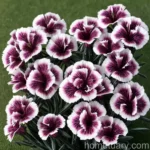
Plant Scientist Blog: Carnation (Dianthus ‘Valda Louise’ ROSIE CHEEKS)
As a plant scientist, I am thrilled to delve into the fascinating world of carnations, specifically the Dianthus ‘Valda Louise’ ROSIE CHEEKS. Carnations are beloved for their beauty and diverse colors, and they have a rich history dating back centuries. In this comprehensive guide, we will explore the culture, uses, care, and interesting facts about this charming flower. Let’s embark on this botanical journey and discover the captivating features of the carnation.
What is a Carnation?
The carnation, scientifically known as Dianthus caryophyllus, is a herbaceous perennial flowering plant that belongs to the Caryophyllaceae family. It is native to the Mediterranean region, including Greece and Croatia. Carnations are renowned for their fragrant, ruffled petals and vibrant colors, making them popular choices for gardens, bouquets, and floral arrangements.
Key Takeaways – Carnation (Dianthus ‘Valda Louise’ ROSIE CHEEKS)
Before delving into the specifics, let’s quickly touch on some key takeaways about the Dianthus ‘Valda Louise’ ROSIE CHEEKS:
- Classification: Dianthus ‘Valda Louise’ ROSIE CHEEKS
- Family: Caryophyllaceae
- Common Name: Carnation
- Flower Type: Herbaceous perennial
- Notable Feature: Distinct ruffled petals and sweet fragrance
Now, let’s explore different aspects of caring for and appreciating carnations.
Culture
Understanding the cultural requirements of carnations is essential for their successful growth and prolific flowering. From water and sunlight needs to soil preferences, it’s crucial to create the ideal environment for these charming plants.
Water
Carnations prefer moderate watering, aiming for evenly moist but not soggy soil. It’s important to water the plants deeply, allowing the water to reach the root zone. However, it’s crucial to avoid waterlogging as this can lead to root rot and other moisture-related issues.
Sunlight
Carnations thrive in full sunlight, requiring at least 4-6 hours of direct sunlight daily. Adequate sunlight is essential for promoting robust growth and vibrant blooming. In regions with hot summers, providing afternoon shade can help protect the plants from intense heat.
Fertilizer
When it comes to fertilizing carnations, a balanced fertilizer with equal parts of nitrogen, phosphorus, and potassium can be beneficial. A slow-release fertilizer applied in early spring and midsummer can provide the necessary nutrients for healthy growth and abundant flowering.
Soil
Carnations prefer well-draining soil with a slightly alkaline pH ranging from 6.7 to 6.9. Amending the soil with organic matter such as compost can enhance its texture and fertility, promoting optimal growth conditions for the plants.
Pruning
Regular deadheading and pruning of spent blooms are essential to encourage continuous flowering and maintain the plant’s overall shape. Removing faded flowers and any diseased or damaged foliage can also help prevent the spread of diseases and maintain the plant’s vigor.
Propagation
Carnations can be propagated through division, cuttings, or seeds. Division is typically done in early spring or early fall, while stem cuttings can be taken in late spring or early summer. If propa…
The content continues in a similar fashion, covering the different aspects and requirements of the Carnations, including uses, common diseases, common pests, and more.