Eastern Cottonwood (Populus Deltoides)
The Eastern cottonwood tree, scientifically known as Populus deltoides, is a large, fast-growing deciduous tree native to North America. This iconic tree.


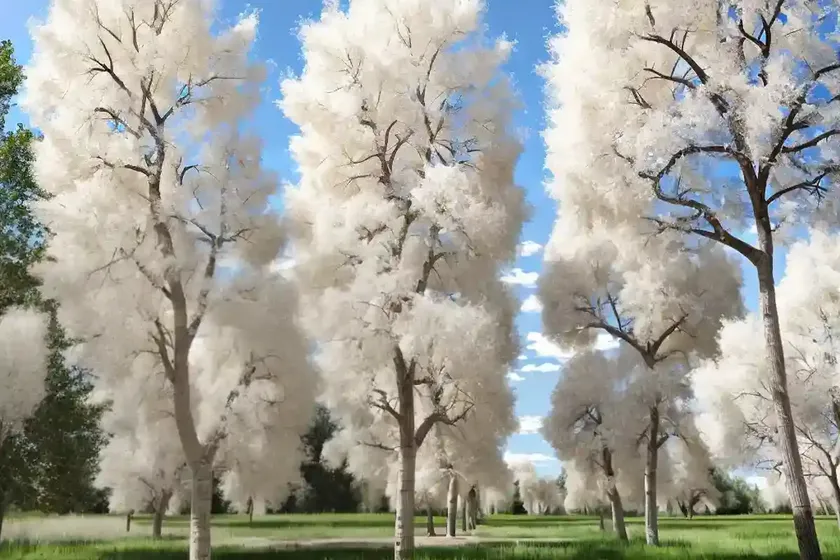
The Eastern cottonwood tree, scientifically known as Populus deltoides, is a large, fast-growing deciduous tree native to North America. This iconic tree, recognized by its triangular-shaped leaves and cotton-like seeds, has several cultural, ecological, and commercial uses. In this comprehensive guide, we will delve into the various aspects of the Eastern cottonwood tree, including its cultural significance, uses, growth requirements, diseases, pests, and much more.
What is the Eastern Cottonwood (Populus deltoides)?
The Eastern cottonwood (Populus deltoides) is a member of the Salicaceae family and is native to eastern North America. The species is widely distributed and is found in a variety of habitats including wetlands, floodplains, and along riverbanks. It has characteristic deltoid (triangular) leaves, which may vary in size and shape depending on environmental conditions. The Eastern cottonwood is a dioecious species, meaning individual trees are either male or female, and the female trees produce cottony seeds that are dispersed by the wind.
Key Takeaways – Eastern Cottonwood (Populus deltoides)
Before diving into the details of the Eastern cottonwood, here are some key takeaways about the tree:
- Scientific Name: Populus deltoides
- Common Names: Eastern cottonwood, necklace poplar, eastern poplar, Carolina poplar
- Family: Salicaceae
- Native Range: Eastern North America
- Habitat: Wetlands, floodplains, riverbanks
- Distinct Features: Deltoid leaves, cotton-like seeds
- Ecological Role: Important species for wildlife habitat and ecosystem stability
- Cultural Uses: Significant cultural and historical importance in various Indigenous cultures
- Commercial Uses: In timber production, environmental remediation, and landscaping
Now let’s explore each of these aspects in more detail.
Culture
The Eastern cottonwood has significant cultural importance, particularly for Indigenous communities in North America. Many Native American tribes have held the cottonwood tree in high regard and utilized its wood and bark for various purposes. The wide distribution of the Eastern cottonwood across diverse ecosystems made it a valuable resource for Indigenous peoples for centuries.
Eastern Cottonwood in Native American Cultures
- Medicinal Uses: Various parts of the Eastern cottonwood, including the bark, leaves, and buds, were used in traditional medicine by Native American tribes. These remedies were used to treat ailments ranging from pain relief to respiratory issues.
- Ceremonial Significance: In some Indigenous cultures, the cottonwood tree holds ceremonial significance, and its wood and bark were used in the construction of ceremonial items and structures.
- Material for Crafts: The pliable wood of the Eastern cottonwood made it ideal for crafting items such as baskets, canoes, and other containers. Additionally, the inner bark fibers were used for weaving.
The cultural significance of the Eastern cottonwood transcends its practical uses and extends to its spiritual and symbolic value in Native American traditions.
Uses
The Eastern cottonwood possesses a wide array of uses, ranging from ecological to commercial applications. Its rapid growth and adaptability make it a valuable species for various purposes.
Environmental Uses
- Wildlife Habitat: The large size and broad canopy of the Eastern cottonwood provide habitat and nesting sites for numerous bird species and mammals. The tree’s presence also contributes to the diversity of plant and animal species in riparian ecosystems.
- Erosion Control: The extensive root system of the Eastern cottonwood helps stabilize soil along riverbanks and prevents erosion, particularly in areas prone to flooding and high water flow.
- Phytoremediation: The tree is adept at absorbing and metabolizing pollutants such as heavy metals, making it valuable in phytoremediation efforts in contaminated soil and water.
Commercial Uses
- Timber Production: The wood of the Eastern cottonwood is used in various commercial applications, including plywood, crates, pallets, and paper production.
- Landscaping: Due to its rapid growth and broad canopy, the Eastern cottonwood is used in landscaping to provide shade and aesthetic appeal in large outdoor spaces.
- Windbreaks: The dense foliage and rapid growth make the Eastern cottonwood an effective windbreak, providing shelter from strong winds in agricultural and residential areas.
The diverse uses of the Eastern cottonwood highlight its ecological and economic importance.
Water
The Eastern cottonwood is well-adapted to moist environments and is commonly found in areas with access to abundant water. Its natural habitat includes floodplains, riverbanks, and riparian zones, where the trees benefit from ample access to water sources.
Water Requirements for Eastern Cottonwood
- Optimal Conditions: Eastern cottonwood trees thrive in moist to wet soil conditions, and they are often found in areas subject to periodic flooding.
- Tolerance to Waterlogged Soil: The species exhibits good tolerance to prolonged periods of waterlogged soil, making it suitable for riparian and flood-prone environments.
- Drought Sensitivity: While the tree tolerates flooding, it may exhibit sensitivity to extended periods of drought, particularly in regions with limited access to water.
Given its natural habitat, the Eastern cottonwood is best suited for landscapes with access to ample water, such as near rivers, lakes, or other water bodies.
Sunlight
The Eastern cottonwood is classified as a fast-growing species, and its growth rate is influenced by access to sunlight. As with many trees, sunlight plays a crucial role in the development and vitality of Eastern cottonwood trees.
Sunlight Requirements for Eastern Cottonwood
-
Full Sun Exposure: The Eastern cottonwood thrives in open, sunny locations with direct exposure to sunlight. This facilitates optimal photosynthesis and overall growth.
-
Tolerance to Partial Shade: While the species prefers full sun, it also exhibits some tolerance to partial shade, particularly in its early years of growth.
-
Canopy Development: In open environments, Eastern cottonwood trees develop broad canopies, providing shade and habitat for various wildlife species.
Sunlight is a critical factor in the growth and development of Eastern cottonwood trees, and access to adequate sunlight is essential for their overall health and vigor.
Fertilizer
The Eastern cottonwood, like many tree species, has certain nutrient requirements for optimal growth and vigor. While the species is generally adaptable and resilient, supplemental fertilization may be beneficial in certain conditions.
Fertilization Considerations for Eastern Cottonwood
-
Nutrient-Rich Soil: In naturally nutrient-rich soils, the Eastern cottonwood may not require additional fertilization, as it is adapted to thrive in a variety of soil conditions.
-
Nutrient-Poor Soil: In poor or degraded soil conditions, particularly in urban environments, the application of balanced, slow-release fertilizers may promote healthier growth and vigor.
-
Young Tree Fertilization: Newly planted or young Eastern cottonwood trees may benefit from fertilization to support early establishment and root development.
While the Eastern cottonwood is adaptable to a range of soil conditions, assessing the specific nutrient levels and requirements of the planting site can guide appropriate fertilization practices.
Soil
The Eastern cottonwood is known for its adaptability to various soil types, particularly those found in riparian and floodplain environments. Its ability to thrive in both nutrient-rich and nutrient-poor soils makes it a resilient species in diverse landscapes.
Soil Requirements for Eastern Cottonwood
-
Moisture-Retentive Soil: The species prefers well-drained, moist to wet soils, and it is commonly found in alluvial soils, loams, and silts associated with riverbanks and floodplains.
-
Tolerance to Variability: Eastern cottonwood trees exhibit tolerance to soil pH variations and can grow in slightly acidic to slightly alkaline soils.
-
Urban Adaptation: Despite its affinity for riparian habitats, the Eastern cottonwood can adapt to urban landscapes, including compacted soils and areas with limited space for root expansion.
Understanding the soil preferences and adaptability of Eastern cottonwood trees is essential for successful planting and establishment in various environments.
Pruning
Proper pruning is essential for maintaining the health, structure, and aesthetics of Eastern cottonwood trees. While the species has a fast growth rate, regular pruning can help manage growth and promote a strong and well-formed canopy.
Pruning Guidelines for Eastern Cottonwood
-
Early Pruning: Young Eastern cottonwood trees may benefit from formative pruning to encourage a central leader and remove any competing or crossing branches.
-
Pruning Frequency: Regular monitoring and pruning, particularly during the early years of growth, can help manage the tree’s rapid growth and prevent the development of weak or narrow-angled branches.
-
Health Considerations: Removal of dead, diseased, or damaged branches, as well as pruning to improve air circulation within the canopy, can promote overall tree health.
Pruning practices should align with the natural growth habits of Eastern cottonwood trees while considering the species’ rapid growth and potential for large size.
Propagation
Eastern cottonwood trees can be propagated through various methods, including seeds, cuttings, and tissue culture. Each propagation method has distinct advantages and considerations, and the choice of technique depends on the desired outcomes and resources available.
Propagation Techniques for Eastern Cottonwood
-
Seed Propagation: Eastern cottonwood trees produce cottony seeds that can be collected and sown in nursery settings. Germination rates and seedling growth can vary, but this method allows for the selection of specific genetic traits.
-
Hardwood Cuttings: Stem cuttings collected from mature trees can be used to propagate new Eastern cottonwood trees. Proper management of moisture and hormone application can enhance rooting success.
-
Tissue Culture: In specialized laboratories, tissue culture techniques can be employed to propagate Eastern cottonwood trees, allowing for the rapid production of identical clones with specific traits.
Understanding the various propagation methods and their respective requirements is essential for successful Eastern cottonwood tree propagation.
Container Popularity
In urban and suburban environments, container planting is a popular method for incorporating trees into landscapes with limited space. While Eastern cottonwood trees are known for their large size, certain varieties and cultivars are suitable for container planting.
Container-Friendly Varieties of Eastern Cottonwood
-
Columnar Cultivars: Some columnar varieties of Eastern cottonwood are well-suited for container planting, as they exhibit a narrower growth habit and require less space for root development.
-
Dwarf Cultivars: Dwarf forms of Eastern cottonwood, which are specifically bred for compact growth, can be successfully planted in large containers and maintained with proper care and maintenance.
-
Urban Landscaping: The use of container-planted Eastern cottonwood trees in urban landscaping can provide shade, aesthetic appeal, and wildlife habitat in confined outdoor spaces.
Selecting appropriate cultivars and providing suitable care, including regular watering and supplemental nutrition, can ensure the successful establishment of Eastern cottonwood trees in containers.
Common Diseases
While generally resilient, Eastern cottonwood trees are susceptible to certain diseases that can impact their health and vigor. Understanding the common diseases and their associated symptoms is crucial for early detection and effective management.
Common Diseases Affecting Eastern Cottonwood
-
Cottonwood Canker (Venturia populina): This fungal disease causes the formation of cankers on branches and stems, leading to dieback and reduced tree vitality.
-
Leaf Spot Diseases: Various fungal pathogens can cause leaf spot diseases, characterized by the presence of dark spots or lesions on the foliage.
-
Rust Diseases: Rust fungi may infect Eastern cottonwood trees, leading to the development of yellow to orange pustules on the leaves and stems.
Proper cultural practices, including regular monitoring, suitable site selection, and appropriate watering and fertilization, can help reduce the risk of disease development in Eastern cottonwood trees.
Disease Diagnosis
Timely and accurate diagnosis of diseases affecting Eastern cottonwood trees is essential for implementing targeted management strategies. Understanding the symptoms and signs of common diseases aids in prompt intervention and control measures.
Diagnosing Diseases in Eastern Cottonwood
-
Symptomatic Evaluation: Assessing the appearance of foliage, bark, and overall tree vigor can provide initial clues regarding the potential disease affecting the Eastern cottonwood.
-
Professional Consultation: Consulting with arborists, plant pathologists, or forestry specialists can facilitate the accurate diagnosis of diseases based on laboratory analysis and symptom evaluation.
-
Management Considerations: Once a disease is accurately diagnosed, appropriate management strategies, such as cultural modifications or targeted treatments, can be implemented to mitigate the impact of the disease.
Early detection and diagnosis of diseases contribute to the overall health and sustainability of Eastern cottonwood populations.
Common Pests
Eastern cottonwood trees are subject to infestation by various pests, including insects and mites, which may impact the tree’s growth, health, and aesthetic value. Identifying common pests and understanding their life cycles is important for implementing effective pest management measures.
Notable Pests Affecting Eastern Cottonwood
-
Cottonwood Leaf Beetle (Chrysomela scripta): The larvae and adults of this leaf-feeding beetle can defoliate Eastern cottonwood trees, leading to reduced photosynthetic capacity and tree stress.
-
Poplar Borer (Saperda calcarata): The larvae of this wood-boring beetle tunnel into the wood of the Eastern cottonwood, leading to structural damage and reduced tree vigor.
-
Eastern Tent Caterpillar (Malacosoma americanum): This defoliating caterpillar species can consume the foliage of Eastern cottonwood trees, particularly in high population densities.
Implementing integrated pest management strategies, including biological controls, cultural modifications, and targeted insecticide applications, can help minimize pest damage to Eastern cottonwood trees.
Botanist’s Tips
As a plant scientist specializing in Eastern cottonwood trees, I have a few botanist’s tips that can help enthusiasts, horticulturists, and arborists successfully cultivate and care for these iconic trees.
Botanist’s Tips for Eastern Cottonwood Trees
-
Site Selection: When planting Eastern cottonwood trees, select sites with appropriate moisture levels and room for expansive root systems, particularly in the case of larger varieties.
-
Root Zone Management: During establishment, provide sufficient water and mulch to maintain soil moisture and reduce competition from turf and other plants.
-
Health Monitoring: Regularly observe the tree for signs of stress, disease, or pest infestations, and take proactive measures to address any issues.
-
Proactive Pruning: Initiate early and formative pruning to promote a strong central leader and well-spaced branches.
-
Cultural Practices: Implement proper fertilization, watering, and soil management to support healthy growth and vitality.
-
Native Landscape Integration: In riparian and wetland restoration projects, consider the ecological role of Eastern cottonwood trees in providing habitat and stabilizing soils.
Following these botanist’s tips can contribute to the successful cultivation and management of Eastern cottonwood trees in various landscapes and settings.
Fun Facts
To conclude our comprehensive guide to the Eastern cottonwood, here are some fun and intriguing facts about this iconic tree species:
- The Eastern cottonwood is among the largest North American hardwood trees and has been known to exceed 100 feet in height.
- Cottonwood seeds are equipped with fluffy cotton-like fibers that aid in wind dispersal, allowing the seeds to travel long distances.
- Eastern cottonwood leaves are triangular in shape and can produce a rustling sound when rustled by wind, earning the tree the nickname “whispering poplar.”
- In addition to its ecological and commercial uses, the Eastern cottonwood holds symbolic and cultural significance in various traditions and folklore.
Links to External Resources
For further information and resources on the Eastern cottonwood (Populus deltoides), consider exploring the following external links:
- USDA Plants Database – Populus deltoides
- In Defense of Plants – The Eastern Cottonwood
- University of Florida IFAS Extension – Eastern Cottonwood Fact Sheet
- The Morton Arboretum – Eastern Cottonwood Species Profile
- Lady Bird Johnson Wildflower Center – Populus deltoides
- Missouri Botanical Garden – Populus deltoides
Conclusion
The Eastern cottonwood (Populus deltoides) stands as a remarkable and valuable tree species with a rich cultural history, ecological significance, and diverse range of uses. From riparian restoration to commercial applications, the species’ adaptability and resilience make it a worthy subject of study and conservation. By understanding its growth requirements, ecological role, and cultural significance, we can better appreciate the contributions of the Eastern cottonwood to our natural and cultural landscapes. Whether towering along riverbanks or providing shade in urban settings, the Eastern cottonwood remains an iconic and essential component of North American ecosystems.
With this comprehensive guide, I have delved into the various aspects of the Eastern cottonwood (Populus deltoides), covering its cultural importance, uses, growth requirements, diseases, pests, and more. This comprehensive resource offers valuable insights for horticulturists, arborists, and enthusiasts interested in understanding and cultivating this iconic tree species. If you have questions or need further information, feel free to reach out and explore the provided links to external resources for additional reading and research.


