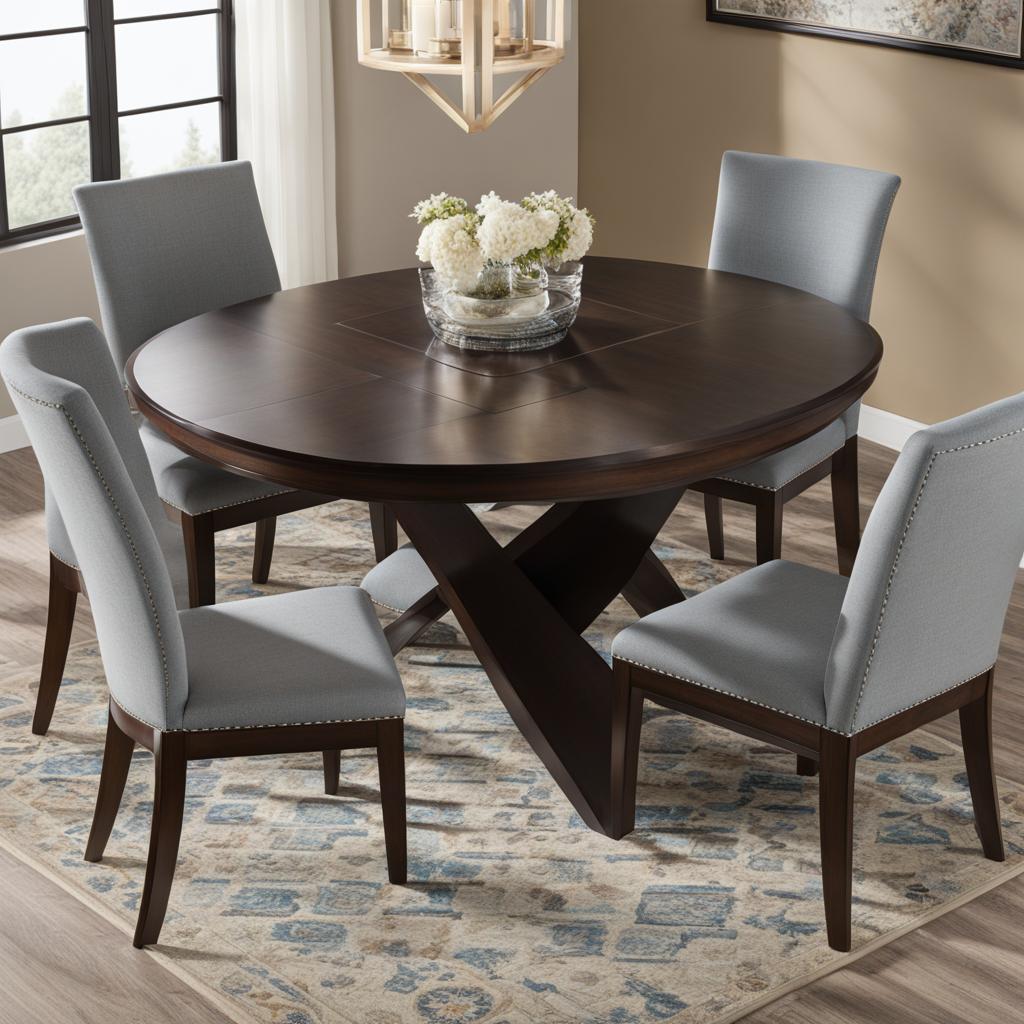
Good quality carpets are an important component of home decor, and choosing the right rug for under a dining table is crucial. Interior designers recommend light earth-toned hues like ivory, beige, and taupe for a timeless and versatile option. Darker naturals such as mossy and olive greens are also predicted to be popular. Warm carpet colors like sienna, umber, and terracotta can create a cozy and luxurious atmosphere. Textured carpets in natural colors, such as sisal and jute, are expected to be on-trend. Natural fiber floorcoverings using wool and natural dyes are gaining popularity for both sustainability and beauty.
Key Takeaways:
- Light earth-toned hues like ivory, beige, and taupe are versatile and timeless choices for rugs under the dining table.
- Darker naturals such as mossy and olive greens bring a cozy and natural atmosphere to the dining area.
- Warm carpet colors like sienna, umber, and terracotta add a touch of natural warmth and create a fashionable statement.
- Textured carpet designs in natural colors, such as sisal and jute, can add depth and interest to any room.
- Natural fiber floorcoverings made from wool and natural dyes are both sustainable and beautiful additions to the dining room.
Light Earth-Toned Hues: Ivory, Beige, and Taupe
When it comes to choosing a rug for underneath your dining table, light earth-toned hues like ivory, beige, and taupe are timeless favorites. These colors provide a versatile and elegant option that can work well with any interior design style.
An ivory carpet, for example, creates a calm and soothing ambiance in your dining room. It serves as a neutral backdrop, allowing you to easily add interest and pattern with furniture and furnishings. Beige and taupe carpets offer a similar effect, providing a warm and inviting atmosphere in your dining area.
| Hue | Color Description |
|---|---|
| Ivory | A soft, creamy white color that adds a sense of tranquility to your dining room. |
| Beige | A warm, sandy color that creates a cozy and welcoming environment. |
| Taupe | A grayish-brown shade that brings sophistication and elegance to your dining space. |
Light earth-toned rugs can effortlessly blend with various color schemes and furniture styles. Whether your dining room features a modern, traditional, or eclectic design, an ivory, beige, or taupe carpet will enhance the overall aesthetic appeal.
When it comes to creating a timeless and versatile dining room design, light earth-toned hues like ivory, beige, and taupe are the go-to choices for a beautiful rug under your dining table.
So, if you’re looking to create a serene and inviting dining area, consider incorporating a rug in one of these elegant shades. They will bring warmth, style, and a touch of sophistication to your dining room.
Darker Naturals: Mossy and Olive Greens
As interior design trends continue to evolve, there is a predicted resurgence in darker earth tones for carpets, specifically mossy and olive greens. These colors are expected to be a new and promising trend, particularly in carpet designs. The deeper shades of green can create a cozy and natural atmosphere, making them perfect for living rooms, staircases, and green-themed hallway ideas.
When it comes to incorporating mossy and olive green carpets into your home, it’s important to consider your overall design aesthetic. These earthy colors work well with a variety of interior styles, from traditional to modern. They can add depth and richness to a space, creating a sense of warmth and tranquility.
“Mossy and olive green carpets provide a refreshing departure from the traditional neutrals and can be a bold statement in any room. The natural hues evoke a sense of nature and bring an organic element that can enhance the overall design,” says interior designer Emily Robinson.
When choosing a mossy or olive green carpet, it’s important to consider the size and shape of the room. Darker colors tend to make a space feel smaller, so they work best in larger rooms with ample natural light. Additionally, consider the other colors in your room’s palette to ensure a cohesive look. Pairing mossy and olive greens with earthy neutrals like beige or taupe can create a harmonious and balanced environment.
| Pros | Cons |
|---|---|
| Mossy and olive greens create a cozy and natural atmosphere. | Darker colors may make a room feel smaller. |
| These earthy tones work well with a variety of interior styles. | May require more frequent cleaning to maintain a fresh look. |
| Bring depth and richness to a space, adding visual interest. | Not recommended for rooms with limited natural light. |
Overall, mossy and olive green carpets can be a striking addition to any home. Their natural hues and organic vibes create a unique and inviting atmosphere. Whether you choose to incorporate them in your living room, hallway, or staircase, these darker naturals are sure to make a statement.
Warm Carpet Colors: Sienna, Umber, and Terracotta
When it comes to choosing a carpet color for your dining room, warm shades can create a welcoming and inviting atmosphere. Sienna, umber, and terracotta are three popular options that can bring a natural warmth to the space. These colors evoke a sense of coziness and can easily complement various design styles.
Sienna, with its reddish-brown undertones, adds a touch of elegance and sophistication to your dining area. It pairs well with neutral or earth-toned furniture, creating a harmonious and balanced look. Umber, on the other hand, offers a deeper and richer shade of brown that can create a more dramatic and luxurious ambiance. It works particularly well in rooms with ample natural light, as it enhances the warm tones and adds depth to the space.
Terracotta, a warm orange-brown color reminiscent of sunsets, brings a vibrant and energetic feel to your dining room. It can instantly brighten up the space and create a cheerful and lively atmosphere. Terracotta works well with earthy tones, such as greens and browns, as well as with pops of contrasting colors like blue or yellow.
Benefits of Warm Carpet Colors
Choosing warm carpet colors for your dining room can have several benefits. Firstly, these colors can create a cozy and comfortable environment, making your dining area feel more inviting and enjoyable. Secondly, warm colors have the ability to visually warm up a room, especially if you have cool-toned walls or furniture. They can add a touch of warmth and balance to the overall color scheme. Lastly, warm carpet colors are versatile and can easily adapt to different design styles and decor choices, allowing you to easily change the look and feel of your dining room in the future.
Pairing Warm Carpet Colors with Other Elements
To create a cohesive and stylish look in your dining room, consider pairing warm carpet colors with complementary elements. For example, you can use light-colored or creamy wallpaper or paint for the walls to create a contrast with the warm carpet. Additionally, incorporating natural materials like wood and rattan in your furniture and accessories can further enhance the warm and inviting atmosphere. Don’t be afraid to experiment with different textures and patterns to add depth and visual interest to the space. By combining warm carpet colors with other design elements, you can create a dining room that is not only visually appealing but also a cozy and comfortable place for family and friends to gather.
Textured Carpet Designs in Natural Colors
When it comes to choosing a rug for your dining room, textured carpet designs in natural colors are a popular choice. These carpets not only add visual interest to your space but also bring a touch of nature indoors. Two highly sought-after options for textured carpets are sisal and jute.
Sisal carpets, made from the fibers of the sisal plant, have a beautiful woven texture that adds depth to your dining area. The natural color variations in sisal create a warm and earthy aesthetic that pairs well with a range of interior styles. Jute carpets, on the other hand, are known for their softness and durability. The natural golden tones of jute carpets bring a sense of warmth and coziness to your dining room, making it feel inviting and comfortable.
Combining these textured carpet designs with other natural elements in your dining room, like wooden furniture and potted plants, can create a harmonious and organic atmosphere. The subtle patterns and unique textures of sisal and jute carpets add visual intrigue without overwhelming the space. Whether you prefer a more rustic, bohemian look or a modern, minimalist style, textured carpets in natural colors can seamlessly blend into any dining room aesthetic.
So, if you’re looking to elevate the design of your dining room with a rug, consider textured carpet designs in natural colors like sisal or jute. These carpets not only offer visual interest and add warmth to your space but also provide a sustainable and environmentally-friendly flooring option. Embrace the beauty of nature in your dining room and create a cozy, inviting atmosphere for family and friends.
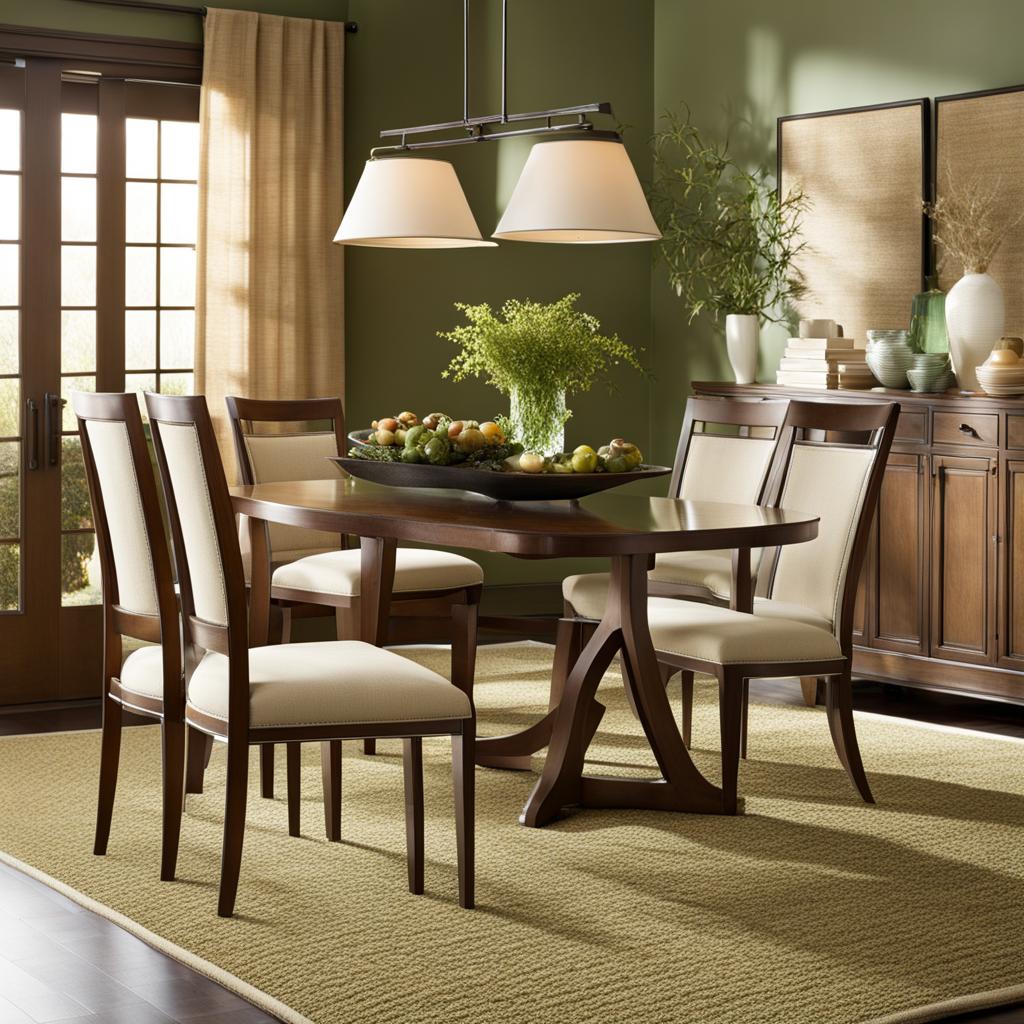
Table: Comparison of Sisal and Jute Carpets
| Feature | Sisal Carpet | Jute Carpet |
|---|---|---|
| Material | Derived from the sisal plant | Derived from the jute plant |
| Texture | Woven texture with natural color variations | Soft and smooth texture |
| Durability | Highly durable and long-lasting | Durable but less resistant to moisture |
| Softness | Less soft compared to jute | Very soft and comfortable underfoot |
| Aesthetic | Rustic and natural look | Warm and cozy appearance |
As shown in the table above, both sisal and jute carpets have their unique characteristics. While sisal carpets offer a more textured and durable option, jute carpets provide a softer and more comfortable feel. Consider your specific needs and preferences when choosing between these two natural carpet materials for your dining room.
Natural Dyes and Wool Colors
When it comes to choosing the perfect rug for your dining room, natural dyes and wool colors can offer a unique and beautiful aesthetic. Natural fiber floorcoverings made from 100% wool and using natural dyes are gaining popularity for their sustainability, durability, and timeless appeal. These carpets often feature intricate and unique designs that add elegance to any space. With a wide range of colors available, you can find a wool rug that complements your dining room decor and creates a warm and inviting atmosphere.
Benefits of Natural Dyes
Choosing a rug made with natural dyes offers several advantages. Firstly, natural dyes are environmentally friendly, as they are derived from plant and animal sources. This makes them a sustainable choice for those who are conscious of their ecological impact. Additionally, natural dyes create unique and vibrant colors that cannot be replicated with synthetic dyes. The rich, earthy tones of natural dyes can add depth and character to your dining room, enhancing its overall aesthetic.
Beauty of Wool Colors
Wool is known for its natural beauty and exceptional quality. Wool rugs come in a variety of colors, ranging from soft neutrals to bold and vibrant hues. The natural fibers of wool have a rich texture that adds warmth and comfort to any space. Wool is also highly resilient and durable, making it an excellent choice for high-traffic areas like dining rooms. With proper care, a wool rug can last for many years, making it a worthwhile investment for your home.
| Natural Dye Colors | Wool Colors |
|---|---|
| Indigo | Charcoal Gray |
| Turmeric | Mustard Yellow |
| Madder Root | Ruby Red |
| Walnut | Chocolate Brown |
Creating a Timeless Look
By incorporating natural dyes and wool colors into your dining room, you can create a timeless and sophisticated look. The earthy tones and texture of wool rugs add warmth and elegance, making your dining space feel inviting and cozy. Whether you prefer a subtle neutral or a bold statement color, there is a wool rug with natural dyes that can complement your personal style and enhance the overall ambiance of your dining room.
Versatile Modern Rugs for Dining Rooms
When it comes to choosing a rug for your dining room, versatility is key. A modern rug can completely transform the look and feel of the space, adding a touch of style and sophistication. With a wide range of options available, from unique shapes and patterns to minimalist designs, you can find the perfect rug that suits your personal taste and complements your dining room decor.
A rug not only adds visual interest to the dining area but also helps to define the space. It creates a designated zone for your dining table and chairs, making the room feel cohesive and well-designed. Plus, a rug can add a layer of softness and texture to the room, making it more comfortable and inviting.
When choosing a versatile modern rug for your dining room, consider the size and shape that will best fit your space. A larger rug that extends beyond the table and chairs can create a sense of luxury and elegance, while a smaller rug that just fits under the table can provide a more minimalistic look. Additionally, consider the color and pattern of the rug to ensure it complements your dining room decor and enhances the overall aesthetic.
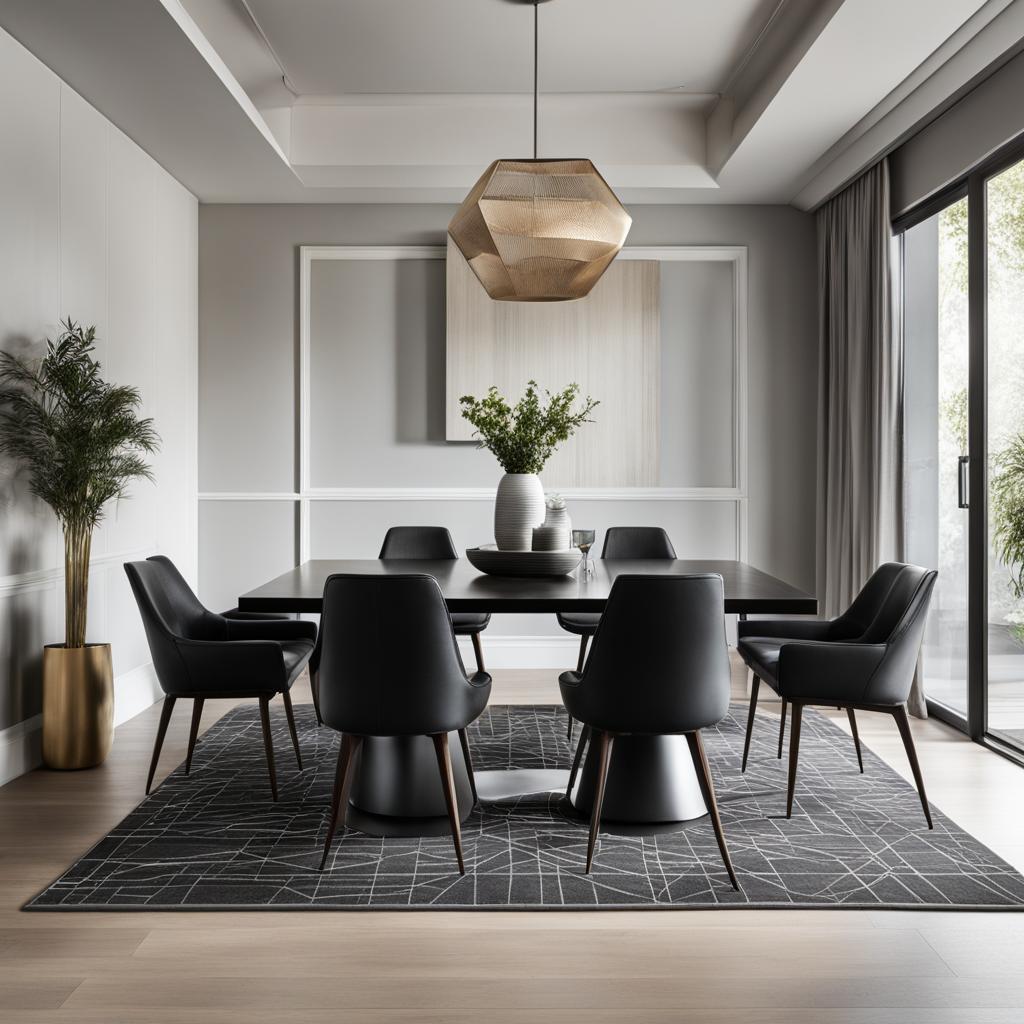
Table: Popular Modern Rug Styles for Dining Rooms
| Rug Style | Description |
|---|---|
| Geometric | A modern and trendy option, featuring bold and abstract patterns that add a contemporary touch. |
| Traditional | Classic designs with intricate patterns and motifs, perfect for adding a touch of elegance and sophistication. |
| Bohemian | Vibrant and eclectic designs that bring a free-spirited and artistic look to your dining room. |
| Natural Fiber | Environmentally-friendly options made from materials like sisal, jute, and bamboo, adding a natural and rustic vibe to the space. |
Remember, the choice of a versatile modern rug for your dining room should ultimately reflect your personal style and preferences. Don’t be afraid to take risks and choose a rug that makes a statement. Whether you opt for a bold geometric pattern or a subtle natural fiber design, the right rug can transform your dining room into a stylish and inviting space.
Pros and Cons of Using a Rug Under Dining Table
Using a rug under a dining table has its pros and cons. Let’s take a look at the advantages and disadvantages to help you make an informed decision.
Anchoring the Space
A rug under a dining table can anchor the space and create a defined zone in the dining area. It visually separates the dining area from the rest of the room, giving a sense of structure and organization.
Adding Softness and Texture
A rug adds softness and texture to a room that is often characterized by hard surfaces. It provides a comfortable and cozy feel underfoot, making your dining area more inviting and comfortable for long meals and conversations.
Protecting the Flooring
One of the benefits of using a rug under a dining table is that it protects the flooring from scratches and dents caused by chair legs. It acts as a buffer between the chairs and the floor, preventing unnecessary damage and extending the lifespan of your flooring.
Potential for Spillages and Damage
On the flip side, there is a potential for spillages and damage from food and chairs. Accidents happen, especially during meal times, and having a rug under the dining table can make it more challenging to clean up spills and stains. It’s important to choose a rug material that is stain-resistant and easy to clean.
Ultimately, the decision to use a rug under a dining table depends on your personal preferences and priorities. Consider the pros and cons mentioned above, and choose a rug that suits your lifestyle and complements the overall design of your dining room.
Choosing the Right Material and Shape for a Rug Under Dining Table
When it comes to choosing a rug for under a dining table, there are two key factors to consider: the material and the shape. The material of the rug can greatly impact its durability, maintenance, and overall aesthetic. Popular choices for dining room rugs include wool, sisal, and jute. Wool is known for its natural resilience and softness, making it a practical and comfortable option. Sisal and jute, on the other hand, offer a more textured and organic look that can add depth and visual interest to the space.
In terms of shape, it is important to select a rug that mirrors the shape of your dining table. For round or oval tables, a larger round rug can create a harmonious and balanced look. On the other hand, rectangular tables call for rectangular rugs that can visually anchor the table and chairs. The size of the rug should also be taken into consideration, ensuring that it is large enough to comfortably accommodate the table and chairs.
By carefully considering the material and shape of the rug, you can find a perfect balance between style and practicality. A durable and well-chosen rug can not only add warmth and texture to your dining room but also protect your flooring and create a cohesive design. Whether you opt for a cozy wool rug or a textured sisal rug, the right choice will enhance the overall look and feel of your dining space.
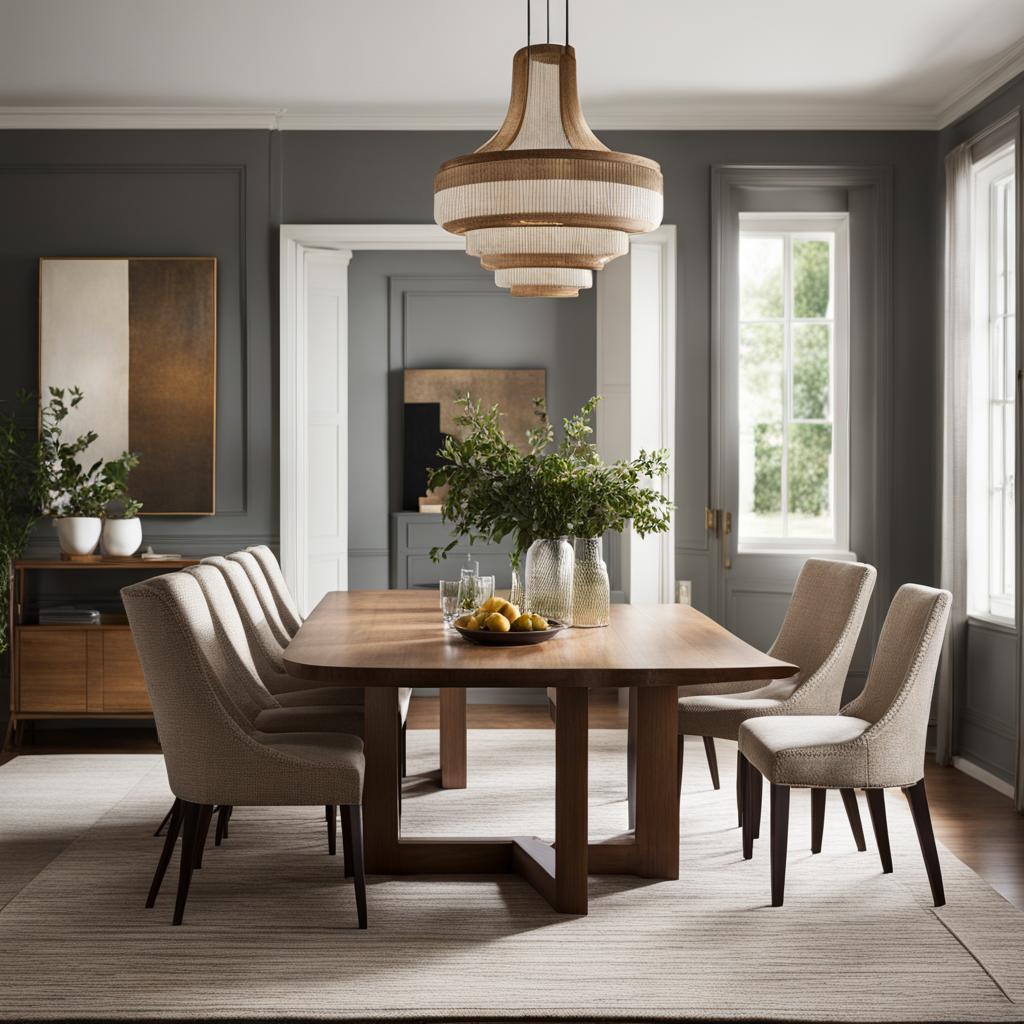
Table: Key Considerations for Choosing the Material and Shape of a Rug Under a Dining Table
| Consideration | Material | Shape |
|---|---|---|
| Durability | Wool: Offers natural resilience and long-lasting quality | Round or Oval: Creates a harmonious look for round or oval dining tables |
| Texture | Sisal or Jute: Adds a textured and organic look to the dining area | Rectangular: Provides a visual anchor for rectangular dining tables |
| Comfort | Wool: Known for its softness and comfort underfoot | – |
| Practicality | Wool, Sisal, or Jute: Easy to clean and maintain | – |
| Visual Appeal | Depends on personal preference and overall design aesthetic | Depends on the shape of the dining table |
Choosing the right material and shape for a rug under a dining table is essential to create a visually appealing and functional space. By considering factors such as durability, texture, comfort, and practicality, you can select a rug that complements your dining room decor. Don’t forget to also take into account the shape of your dining table to ensure a harmonious and balanced look. With careful consideration, you can find a rug that enhances the overall design of your dining area while providing comfort and functionality.
The Balance Between Style and Practicality
When it comes to choosing a rug for under a dining table, finding the right balance between style and practicality is essential. While a rug can add visual appeal and enhance the overall design of a dining room, it is important to consider its functionality and durability as well. One of the main concerns when placing a rug under a dining table is the potential for spills and damage.
While spills are inevitable in a dining space, selecting a rug with stain-resistant materials or easy-to-clean features can help minimize the impact. Synthetic fibers like nylon or polyester are known for their resilience against stains and are a practical choice for a dining area. Additionally, opting for a rug with a low pile or flatweave construction makes it easier to clean and maintain, as it prevents crumbs and debris from getting trapped in the fibers.
However, practicality does not mean compromising on style. There are plenty of stylish rug options that are designed to withstand the demands of a dining space. Consider rugs with patterns or textures that can help disguise any potential stains or spills. Geometric or abstract designs are great choices as they are forgiving and can add a touch of modern elegance to the room. Additionally, choosing a rug in a darker color or with a busy pattern can also help mask any imperfections that may occur over time.
Table 10. Comparing Rug Materials for Practicality and Style
| Rug Material | Practicality | Style |
|---|---|---|
| Nylon | Stain-resistant, easy to clean | Wide range of colors and patterns |
| Polyester | Stain-resistant, easy to clean | Soft and luxurious feel, vibrant colors |
| Wool | Naturally stain-resistant, durable | Classic and timeless, natural texture |
| Polypropylene | Stain-resistant, easy to clean | Budget-friendly, wide variety of styles |
Ultimately, finding the balance between style and practicality comes down to personal preference and the specific needs of your dining room. Take into account your lifestyle, the level of foot traffic in the space, and your cleaning routine when choosing a rug for under your dining table. With the right combination of materials, pattern, and color, you can have a rug that not only adds visual appeal but also withstands the rigors of daily use.
Tips for Rug Maintenance and Care
Proper maintenance and care of your rug under a dining table are essential to keep it looking its best. Regular cleaning and preventative measures can help extend the life of your rug and preserve its appearance. Here are some tips for rug maintenance and care:
Vacuum regularly
To remove dirt, dust, and debris from your rug, vacuum it regularly. Use a vacuum cleaner with a brush attachment or a vacuum specifically designed for rugs and carpets. Be sure to vacuum both sides of the rug to thoroughly clean it.
Spot clean promptly
If spills or stains occur, it is important to address them promptly. Blot the area with a clean cloth or paper towel to absorb as much liquid as possible. Avoid rubbing the stain, as this can spread it further. Use a mild carpet cleaner or a mixture of water and vinegar to gently clean the stained area.
Rotate the rug
To prevent uneven wear and tear, rotate your rug periodically. This will distribute the foot traffic and sunlight exposure evenly across the rug, helping it to maintain its appearance and durability over time.
Use rug pads
Place rug pads underneath your rug to prevent slippage and provide cushioning. Rug pads also help protect your flooring from scratches caused by the rug’s backing. Choose rug pads that are suitable for your flooring type to ensure optimal performance.
| Cleaning solution | Materials needed | Instructions |
|---|---|---|
| Mild carpet cleaner | – Clean cloth or paper towel – Mild carpet cleaner – Water – Spray bottle |
|
By following these tips for rug maintenance and care, you can keep your rug under the dining table looking clean, fresh, and in optimal condition for years to come.

Finding the Perfect Rug for Your Dining Room
When it comes to finding the perfect rug for your dining room, several factors should be taken into consideration to ensure it enhances the overall design and meets your functional needs. From personal style to budget considerations, here are some rug shopping tips to help you make the right choice:
Consider Your Personal Style
Your dining room rug should reflect your personal style and complement the existing decor. If you prefer a minimalist look, consider a rug with clean lines and a neutral color palette. For a more eclectic aesthetic, opt for a rug with bold patterns or vibrant colors. By aligning the rug with your personal style, it will become a cohesive element in the overall design of the space.
Take Budget Considerations into Account
Before embarking on your rug shopping journey, it’s essential to establish a budget. Rugs come in a wide range of price points, so having a set budget will help narrow down your options. Remember to factor in any additional costs such as rug pads or professional cleaning services. With a clear budget in mind, you can focus on finding a rug that meets both your design preferences and financial constraints.
Find the Right Size and Shape
When choosing a rug for your dining room, it’s crucial to find the right size and shape to ensure it fits the space appropriately. A general rule of thumb is to select a rug that is large enough to accommodate both the dining table and chairs, allowing for comfortable movement. For rectangular dining tables, opt for a rug that mirrors the shape of the table. Round or oval tables, on the other hand, are better suited to larger round rugs. By considering the size and shape of the rug, you can create a visually pleasing and well-proportioned dining area.
Seek Professional Advice
If you’re unsure about which rug will best complement your dining room or need guidance on specific design choices, don’t hesitate to seek professional advice. Interior designers or rug specialists can provide valuable insights and recommendations based on your unique preferences and the layout of your dining room. Their expertise will help ensure that you find the perfect rug that enhances the beauty and functionality of your dining space.
| Pros | Cons |
|---|---|
| Enhances the visual appeal of the dining room | Potential for spills and damage |
| Defines the dining area and anchors the space | Requires regular maintenance and care |
| Adds softness and texture to a room | May require professional cleaning |
| Protects the flooring from scratches | Choice of material and size should be carefully considered |
Conclusion
Choosing the best rug for under a dining table involves several considerations to ensure it complements the overall design of the dining room. The color, material, size, and shape all play a crucial role in finding the perfect rug. Light earth-toned hues, such as ivory, beige, and taupe, are timeless options that work well in any interior design style. On the other hand, darker naturals like mossy and olive greens bring a cozy and natural atmosphere to a space.
Warm carpet colors like sienna, umber, and terracotta can create a warm and inviting ambiance in a dining room. Textured carpet designs, particularly in natural colors like sisal and jute, add depth and interest to the room. Additionally, considering the sustainability and beauty of natural fiber floorcoverings made from 100% wool and using natural dyes is a rising trend.
When choosing a rug, it is important to find the right balance between style and practicality. While a rug adds visual appeal and softness to the dining area, it can be susceptible to spills and damage. Regular maintenance and care, including vacuuming and spot cleaning, are essential to preserve the rug’s longevity. By following these tips and considering personal style and budget, you can find the perfect rug that transforms your dining room into a stylish and inviting space.
FAQ
What are the recommended rug colors for under a dining table?
Interior designers recommend light earth-toned hues like ivory, beige, and taupe for a timeless and versatile option. Darker naturals such as mossy and olive greens are also predicted to be popular. Warm carpet colors like sienna, umber, and terracotta can create a cozy and luxurious atmosphere.
Are textured carpets in natural colors fashionable for dining rooms?
Yes, textured carpets in natural colors like sisal and jute are expected to be on-trend in 2024. They add depth and interest to any room and work perfectly with textured rugs.
Are natural fiber floorcoverings gaining popularity?
Yes, natural fiber floorcoverings made from wool and using natural dyes are gaining popularity for their sustainability, durability, and beauty.
What are the considerations when choosing a rug for under a dining table?
When choosing a rug for under a dining table, it is important to consider the material, shape, size, and practicality. Materials like wool, sisal, and jute are popular choices for their durability and texture. Low-pile rugs are recommended for easy cleaning, and the shape and size should mirror the dining table.
What are the pros and cons of using a rug under a dining table?
The pros of using a rug under a dining table include anchoring the space, adding softness and texture, and protecting the flooring. However, there is a potential for spillages and damage from food and chairs.
How should I care for a rug under a dining table?
Proper maintenance and care of the rug are essential. Regular vacuuming, spot cleaning, and professional cleaning when necessary can help keep the rug in good condition. Using rug pads can prevent slipping and protect the flooring underneath.
How do I find the perfect rug for my dining room?
When shopping for a rug for your dining room, consider your personal style, the overall design of the room, the size and shape that would work best, and your budget. Take your time to browse through different options and don’t hesitate to ask for professional advice.