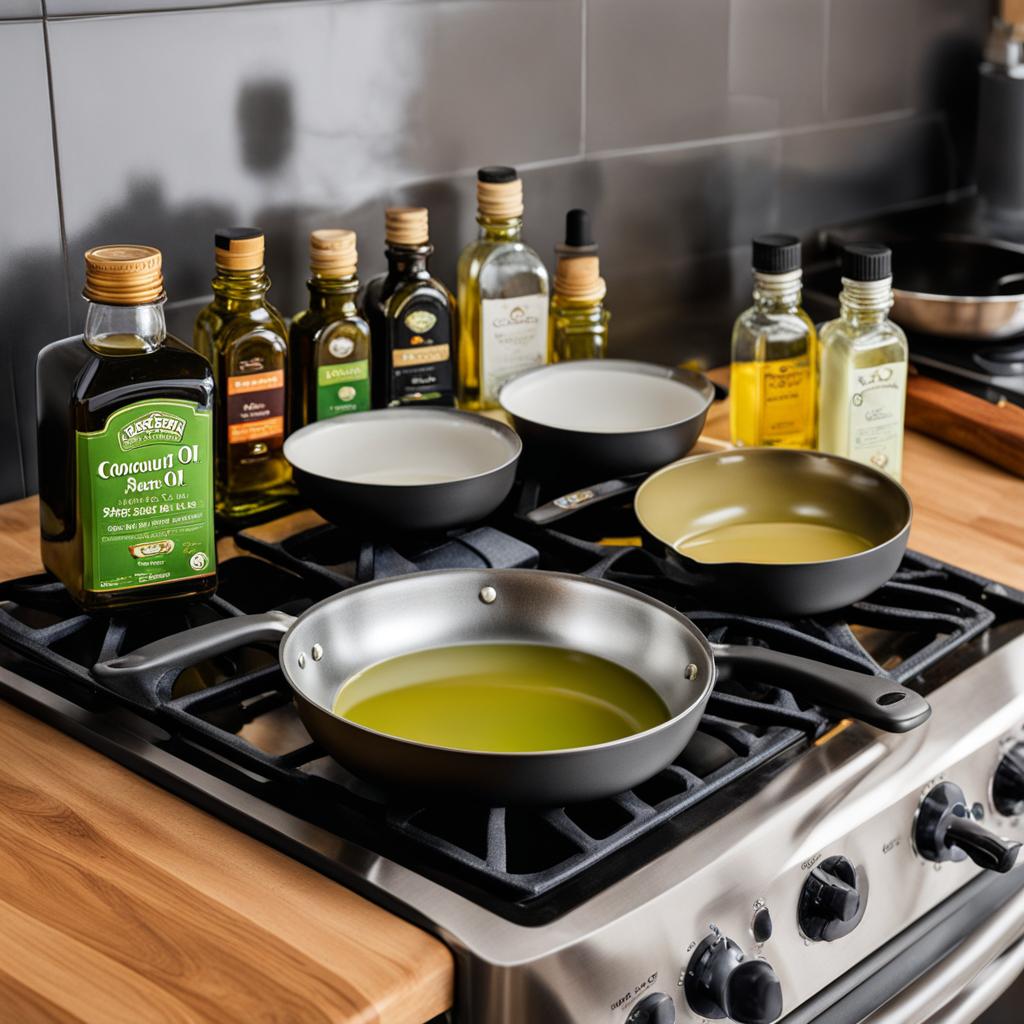
Nonstick pans are a staple in many kitchens, providing a slick surface for easier cooking and effortless cleanup. However, to truly enhance your cooking experience and protect your nonstick pans, it’s crucial to use the right oil. With so many options available, it can be overwhelming to determine which oil is best suited for nonstick pans. In this article, I will guide you through the top oils recommended for nonstick pans, ensuring that your cooking adventures are smooth and enjoyable.
Key Takeaways:
- Choosing the right oil is essential for enhancing your cooking experience with nonstick pans.
- Avoid using cooking spray and opt for minimal amounts of oils like canola, olive, vegetable, or corn oil.
- An oil mister can be a great investment for reduced calorie options.
- Using the right cooking utensils, controlling heat, and practicing proper cleaning techniques are also crucial for maintaining the longevity of nonstick pans.
- Properly caring for your nonstick pans can ensure they serve you for years to come.
Using the Right Cooking Utensils
When it comes to cooking with nonstick pans, using the right utensils is crucial for preserving the integrity of the nonstick surface. The wrong utensils can cause scratches and damage that shorten the lifespan of your pans. To ensure you have the best utensils for nonstick pans, consider using wooden spoons, heatproof silicone spoons, and spatulas.
Wooden spoons are a classic choice for nonstick pans. They are gentle on the surface and won’t leave any marks or scratches. Heatproof silicone spoons and spatulas are also great options, as they can withstand high temperatures without melting or warping. These utensils are designed to be non-abrasive, allowing you to stir, flip, and scrape your food without damaging the nonstick coating.
By using the best utensils for nonstick pans, you can enjoy the benefits of a nonstick surface without worrying about causing any harm. Remember, it’s always better to be safe than sorry when it comes to protecting your cookware investments.
Table: Comparison of Utensils for Nonstick Pans
| Utensil | Material | Heat Resistance | Gentle on Nonstick Surface |
|---|---|---|---|
| Wooden Spoons | Wood | Up to 450°F | Yes |
| Heatproof Silicone Spoons | Silicone | Up to 600°F | Yes |
| Heatproof Silicone Spatulas | Silicone | Up to 600°F | Yes |
As shown in the table above, wooden spoons, heatproof silicone spoons, and spatulas are all suitable options for nonstick pans. They provide the necessary heat resistance and are gentle on the nonstick surface. Choose the utensil that suits your cooking needs and preferences.
Controlling the Heat
When it comes to cooking with nonstick pans, controlling the heat is crucial for maintaining their longevity and performance. Using high heat with nonstick pans can lead to the deterioration of the nonstick coating, reducing its effectiveness over time. To protect the nonstick surface, it is recommended to use medium heat or lower.
Each nonstick pan has a maximum temperature advised by the manufacturer. It is important to check the pan’s owner’s manual or packaging for this information. Exceeding the recommended maximum temperature can cause the pan to warp or bubble, potentially damaging the nonstick coating.
Furthermore, it is essential to note that not all nonstick pans are oven-safe. Unless specified as oven-safe by the manufacturer, avoid putting nonstick pans in the oven to prevent potential damage.
To summarize, using high heat with nonstick pans can be detrimental to their performance and longevity. Stick to medium heat or lower, and always follow the manufacturer’s guidelines regarding maximum temperature and oven safety.
Heat Guidelines for Nonstick Pans
| Heat Level | Recommended | Avoid |
|---|---|---|
| Low | ✔︎ | |
| Medium | ✔︎ | |
| High | ✘ |
Proper Cleaning Techniques
Keeping your nonstick pans clean is essential for maintaining their quality and longevity. By following the proper cleaning techniques, you can ensure that your pans remain in great condition for years to come. Here are some tips to help you clean your nonstick pans effectively:
Handwashing with Gentle Detergents
When it comes to cleaning nonstick pans, it’s best to wash them by hand rather than using a dishwasher. Use a soft sponge, brush, or microfiber towel along with a mild dish soap to gently clean the surface. Avoid using abrasive cleaners like scouring pads or steel wool, as they can scratch the nonstick coating and diminish its effectiveness.
Pro Tip: Some nonstick pans are labeled as dishwasher-safe, but it’s still recommended to wash them by hand to protect the nonstick surface from any potential damage during the dishwasher cycle.
Removing Stubborn Residue
If you encounter stubborn food residue or stains on your nonstick pans, try using a baking soda and water paste. Apply the paste to the affected areas and let it sit for a few minutes before gently scrubbing with a non-abrasive sponge or brush. The baking soda’s mild abrasive properties can help lift off the residue without damaging the nonstick coating.
Drying and Storing
After cleaning your nonstick pans, it’s important to ensure they are thoroughly dried before storing. Use a clean towel or air-dry the pans to prevent any moisture buildup, which can lead to rust or damage the nonstick surface over time. When storing your pans, avoid stacking them to prevent scratches. If space allows, hang them or use pan protectors to keep them safe and in optimal condition.
| Cleaning Tips | Do’s | Don’ts |
|---|---|---|
| Use gentle detergents | Handwash with mild dish soap | Avoid dishwasher detergents and bleach |
| Remove stubborn residue | Use baking soda and water paste | Avoid abrasive cleaners and scouring pads |
| Dry and store properly | Thoroughly dry before storing | Avoid stacking without pan protectors |
By following these proper cleaning techniques, you can maintain the nonstick properties of your pans and ensure their longevity. Remember to always use gentle detergents, avoid abrasive cleaners, and dry and store your pans properly. With the right care, your nonstick pans will continue to provide an enhanced cooking experience for years to come.
Storage and Maintenance Tips
Properly storing and maintaining your nonstick pans is essential for their longevity and optimal performance. Follow these tips to ensure that your pans last for years to come.
Storing Your Nonstick Pans
When it comes to storing your nonstick pans, it’s important to avoid stacking them on top of each other, as this can result in scratches and damage to the nonstick coating. Instead, consider hanging your pans using hooks or placing them in a cupboard with ample space between each pan. This will help prevent any accidental scraping or chipping of the nonstick surface.
Avoid Storing Food in Nonstick Pans
While it may be tempting to store leftovers directly in your nonstick pans, it’s best to transfer the food into separate containers. Storing food in nonstick pans can cause additional wear and tear on the nonstick finish and may lead to a metallic taste or coating degradation. Invest in quality food storage containers designed for the refrigerator to keep your leftovers fresh.
Replacing Your Nonstick Pans
Even with proper care and maintenance, nonstick pans will eventually wear out over time. Pay attention to signs of wear, such as peeling or excessive food sticking, as these indicate that it’s time to replace your pan. On average, nonstick pans should be replaced every couple of years to ensure optimal cooking performance. Look for pans with durable coatings and advanced nonstick technologies for extended longevity.
| Signs it’s time to replace your nonstick pan: | Reasons to replace your nonstick pan: |
|---|---|
| Peeling or flaking of the nonstick coating | To maintain optimal cooking performance |
| Excessive food sticking, despite proper care and seasoning | To prevent food from burning or sticking |
| Warped or damaged pan surface | To ensure even heat distribution |
By following these storage and maintenance tips, you can extend the lifespan of your nonstick pans and continue to enjoy their benefits in the kitchen. Remember to store them properly, avoid storing food in them, and replace them when necessary for optimal cooking performance.
Understanding Different Coatings
Nonstick pans can have different coatings, each with its own characteristics and considerations. The two most common types of coatings are Teflon (PTFE) and ceramic finishes. Teflon coatings have been widely used in nonstick pans for decades, but they belong to a family of chemicals known as PFAS, which have raised some health and environmental concerns in recent years. Ceramic finishes, on the other hand, are made from inorganic materials and are often marketed as a safer alternative to Teflon.
While Teflon coatings have been extensively tested and are considered safe for typical household use, it is important to handle them with care. Overheating Teflon-coated pans can release harmful fumes, so it is crucial to cook within the recommended temperature range. Additionally, avoid using metal utensils or abrasive cleaning tools that can scratch the Teflon surface and compromise its nonstick properties.
Ceramic finishes have gained popularity for their eco-friendly claims and perceived safety. However, it is essential to note that not all ceramic-coated pans are created equal. Some may still contain trace amounts of PFAS or other potentially harmful substances. To ensure the safety of your ceramic-coated pans, look for products labeled as PFAS-free and follow the manufacturer’s care instructions to maintain their longevity.
Comparing Teflon and Ceramic Coatings
| Coating Type | Advantages | Considerations |
|---|---|---|
| Teflon (PTFE) |
|
|
| Ceramic |
|
|
Ultimately, the choice between Teflon and ceramic coatings comes down to personal preference and priorities. Both can provide effective nonstick performance when used and maintained correctly. By understanding the characteristics of different coatings and following appropriate care instructions, you can enjoy the benefits of nonstick cooking while minimizing potential risks.
Dos and Don’ts for Nonstick Pans
When it comes to using nonstick pans, there are certain dos and don’ts that can help you maintain their performance and extend their lifespan. By following these guidelines, you can ensure that your nonstick pans continue to provide you with effortless cooking experiences for years to come.
Dos:
- Use utensils made of wood or heatproof silicone to avoid scratching the nonstick surface. These materials are gentle and won’t cause any damage.
- Control the heat by using medium heat or lower. High heat can lead to the deterioration of the nonstick coating, so it’s important to be mindful of the temperature.
- Properly clean your nonstick pans using soft sponges, brushes, or microfiber towels with mild dish soap. Avoid abrasive cleaners that can scratch the surface.
- Store your nonstick pans carefully to prevent any damage. If stacking them, use protective pads to avoid scratching the coating.
Don’ts:
- Avoid using metal utensils that can scratch the nonstick surface. Opt for non-metal alternatives to keep your pans in great condition.
- Never subject hot nonstick pans to sudden temperature changes, such as transferring them from a hot stovetop to a cold countertop. This can cause warping and affect the pan’s performance.
- Avoid using aerosol cooking spray on nonstick pans. The buildup from these sprays can be difficult to remove and can reduce the effectiveness of the nonstick coating.
- Avoid cooking acidic foods in nonstick pans as they can damage the coating. Stick to neutral ingredients to maintain the longevity of your pans.
By following these dos and don’ts, you can maximize the performance and lifespan of your nonstick pans. Proper care and maintenance are key to ensuring that your pans remain nonstick and provide you with enjoyable cooking experiences every time.
| Do | Don’t |
|---|---|
| Use utensils made of wood or heatproof silicone | Use metal utensils that can scratch the nonstick surface |
| Control the heat by using medium heat or lower | Subject hot nonstick pans to sudden temperature changes |
| Properly clean your nonstick pans with soft sponges and mild dish soap | Use abrasive cleaners that can scratch the surface |
| Store nonstick pans carefully to prevent damage | Use aerosol cooking spray on nonstick pans |
Proper Cooking Temperature
When it comes to cooking with nonstick pans, knowing and following the recommended heat limits is crucial to maintaining their quality and performance. Exceeding the recommended heat can cause damage to the pan’s nonstick coating, resulting in a loss of its nonstick properties.
Each nonstick pan comes with a heat warning label indicating the maximum temperature it can withstand. It’s important to refer to this label and avoid surpassing the specified heat limit. By doing so, you’ll prevent warping and bubbling of the nonstick coating, ensuring that your pans last longer and remain in optimal condition.
Keep in mind that using excessive heat can also impact the food you’re cooking. High temperatures can lead to overcooking or burning, affecting the taste and texture of your dishes. By using the appropriate heat level recommended for nonstick pans, you can ensure that your food is cooked to perfection while maintaining the integrity of your cookware.
The Importance of Proper Temperature Control
Controlling the heat while cooking with nonstick pans is not only essential for the longevity of the pans but also for the quality of your meals. By maintaining the recommended heat limits, you can prevent damage to the nonstick coating and achieve optimal cooking results.
| Heat Level | Recommended Use |
|---|---|
| Low to Medium Heat | Most nonstick pans are designed to work best with low to medium heat. This range ensures even heating without risking damage to the nonstick surface. It’s ideal for tasks like sautéing, simmering, and gently cooking delicate ingredients. |
| High Heat | While some nonstick pans may tolerate higher temperatures, it’s generally best to avoid using high heat. High heat can cause the nonstick coating to deteriorate more rapidly. If a recipe requires high heat, it’s advisable to use cookware specifically designed for high-temperature cooking. |
By following the recommended heat limits for your nonstick pans, you can ensure their longevity and enjoy the benefits of hassle-free cooking. Remember, maintaining proper temperature control not only protects your pans but also enhances the taste and texture of your culinary creations.
Choosing Soft Detergents
When it comes to cleaning your nonstick pans, using the right detergent is crucial to protect the delicate coating. Soft detergents are gentle on the nonstick surface, ensuring its longevity and effectiveness. Dishwasher detergents, bleach, and harsh cleaners can cause damage that may compromise the nonstick properties of your pans.
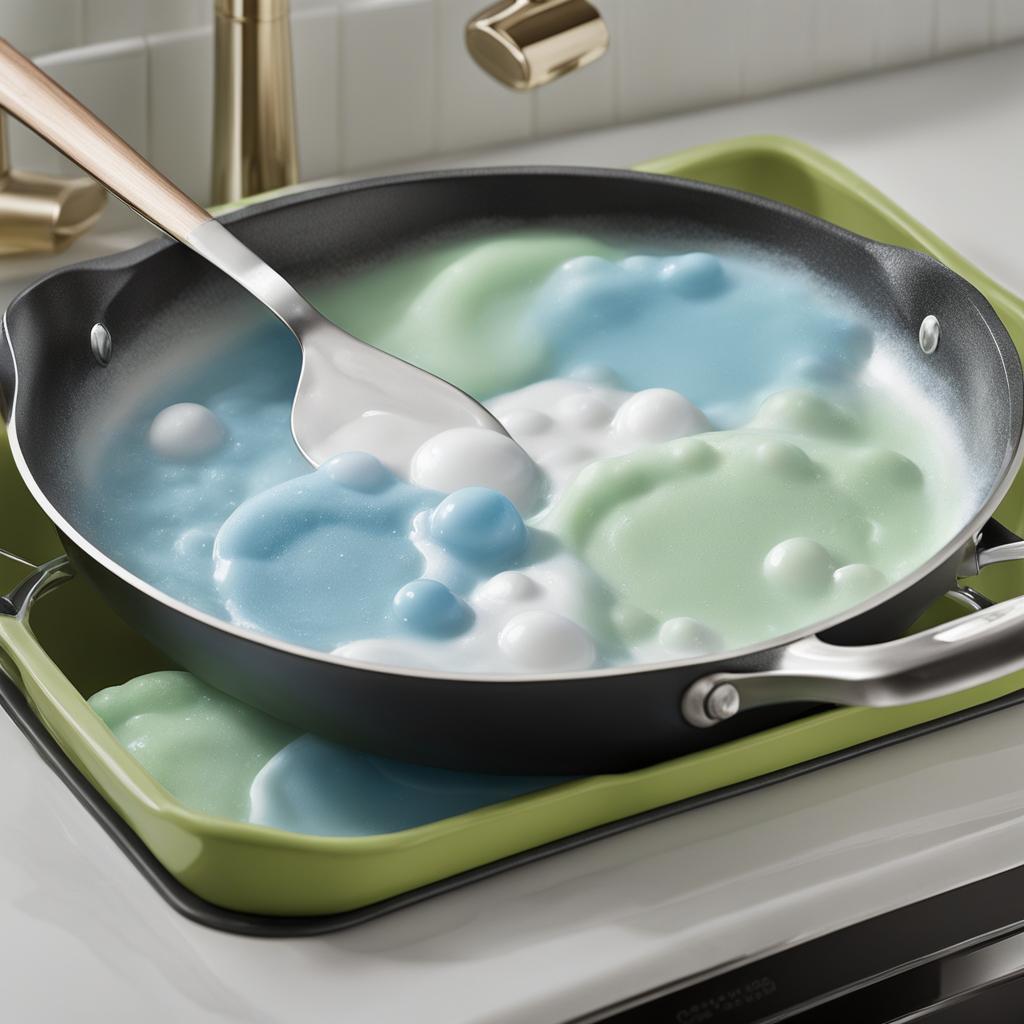
Opt for mild dish soaps or specialized nonstick pan detergents when handwashing your pans. These detergents are designed to be gentle on the coating while effectively removing residue and grease. Look for products specifically labeled as safe for nonstick pans to ensure you’re using the right detergent.
Cleaning your nonstick pans with soft detergents will help preserve their nonstick properties and keep them in excellent condition for years to come. Remember to hand dry your pans thoroughly after washing to prevent rust formation and maintain their nonstick capabilities.
| Detergent Brand | Description |
|---|---|
| Brand A | A gentle dish soap that is safe for nonstick pans. It effectively removes residue without damaging the coating. |
| Brand B | A specialized nonstick pan detergent formulated to maintain the nonstick properties. It tackles grease and grime while being gentle on the coating. |
| Brand C | A mild detergent that is suitable for handwashing nonstick pans. It helps remove tough stains without compromising the nonstick surface. |
Choose a soft detergent that suits your preference and ensure your nonstick pans stay in optimal condition. By using the right detergent, you can preserve the nonstick properties of your pans and enjoy hassle-free cooking experiences.
The Importance of Proper Drying
Properly drying your nonstick pans is essential to maintain their quality and prevent any potential damage. After washing your pans, it’s important to ensure they are thoroughly dried to avoid rusting and to prevent any leftover oils from baking onto the pan’s surface. Hand drying is recommended as it allows for better control and reduces the risk of any moisture lingering on the pan.
When hand drying, use a soft, absorbent cloth or towel to gently dry the pan. Be sure to pay attention to any grooves or crevices where water may accumulate. It’s crucial to remove all moisture from the pan to prevent the growth of bacteria or mold.
Remember to avoid air drying your nonstick pans as it may lead to water spots and potential damage. Additionally, refrain from using any heat sources, such as placing the pans on stovetop burners or in the oven, to expedite the drying process. This can cause warping or damage to the nonstick coating.
Avoiding Common Mistakes
There are a few common mistakes to avoid when drying your nonstick pans. Firstly, avoid using abrasive materials such as scouring pads or harsh brushes, as they can scratch the nonstick surface. Opt for softer cloths or sponges that won’t damage the coating.
Additionally, be cautious of leaving your pans to air dry or stacking them while still wet. This can create a moist environment, leading to the growth of bacteria or mold. Always ensure your pans are completely dry prior to storing them.
By properly drying your nonstick pans after each use, you can maintain their quality and extend their lifespan. Remember to hand dry using a soft cloth or towel, ensuring all moisture is removed. Avoid common mistakes such as using abrasive materials or air drying, which can lead to damage or bacterial growth. Taking the extra time to properly dry your nonstick pans will help to preserve their nonstick properties and enhance your cooking experience.
Avoid Storing Food in Nonstick Pans
When it comes to storing food, it’s important to avoid using nonstick pans as containers. While these pans are excellent for cooking, they are not designed for food storage. Storing food in nonstick pans may lead to a metallic taste in your leftovers or even cause degradation of the nonstick coating itself. To ensure the freshness and taste of your food, it’s best to transfer leftovers into separate containers specifically designed for refrigerator storage.
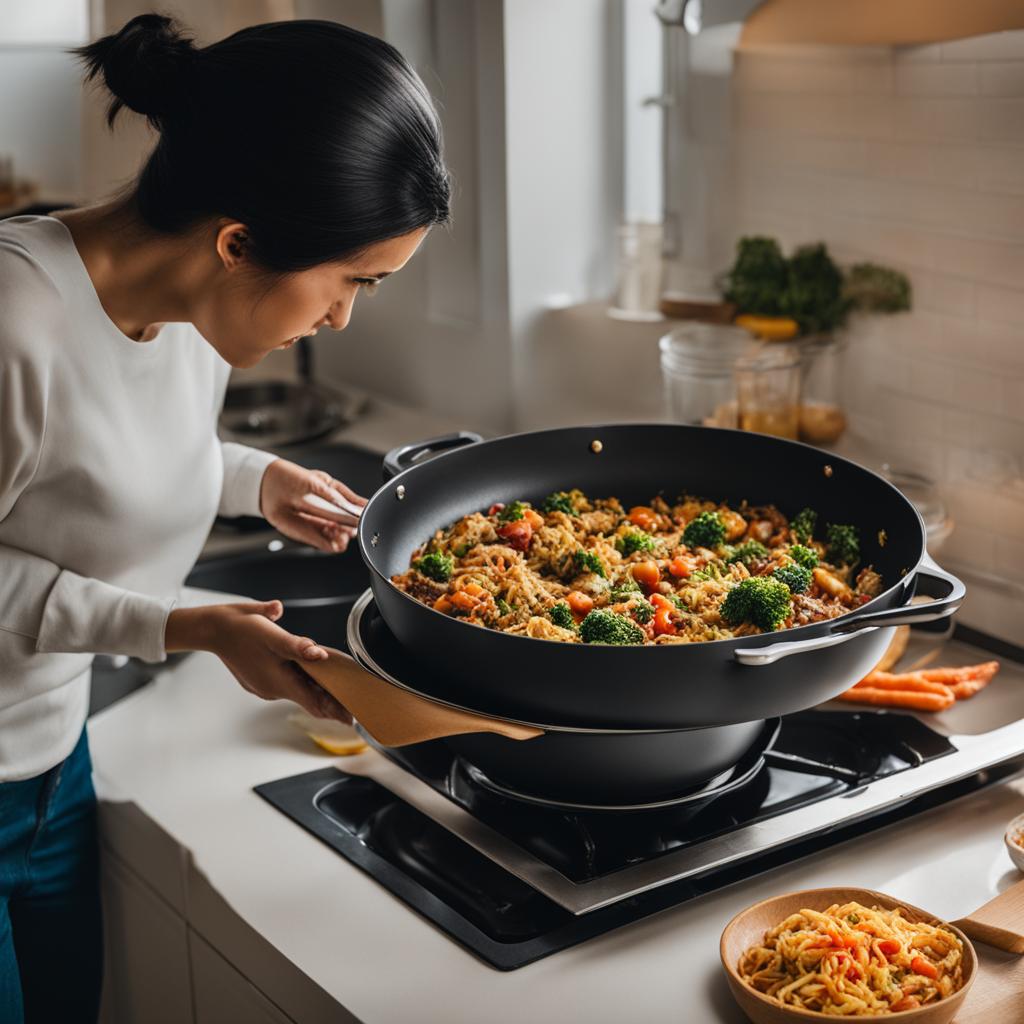
By using proper storage containers, you can prevent any potential chemical reactions between the food and the nonstick coating. Additionally, storing food in nonstick pans can cause additional wear and tear on the coating, reducing its effectiveness over time. Taking the extra step to transfer your leftovers into separate containers will help preserve the quality and integrity of your food while keeping your nonstick pans in optimal condition for future use.
When it comes to storing food in nonstick pans, it’s better to err on the side of caution. By avoiding this practice and opting for appropriate storage containers, you can ensure that your food remains fresh and delicious, while also prolonging the lifespan of your nonstick pans.
Proper Pan Handling and Storage
Properly handling and storing your nonstick pans is crucial to maintain their quality and extend their lifespan. Follow these best practices:
Avoid Stacking with Careless Precision
When stacking nonstick pans, ensure there is enough space between each pan to prevent scratching or scraping the nonstick coating. Avoid sharp objects or corners that can cause damage. By maintaining a careful and considerate stacking arrangement, you can protect the integrity of the pans for years to come.
Hang Pans for Easy Access
If possible, consider hanging your nonstick pans. This storage method not only saves space but also minimizes the risk of scratches, dents, or other accidental damage. Hanging your pans allows for easy access without any scraping or rubbing against other surfaces. It’s a convenient and practical solution to keep your pans in top condition.
Protect with Nonstick Pan Protectors
Investing in nonstick pan protectors can offer additional protection when stacking or storing pans. These soft, flexible liners act as a barrier between pans, guarding against potential scratches or other damage. Simply place a protector between each pan to provide extra cushioning and safeguard your nonstick coating.
By following these proper pan handling and storage practices, you can ensure that your nonstick pans remain in excellent condition and continue to provide optimal cooking performance. Remember to always exercise care and avoid any actions that may compromise the integrity of the nonstick coating.
| Best Practices for Nonstick Pan Storage |
|---|
| Avoid careless stacking that can lead to scratches or damage |
| Hang pans for easy access and protection |
| Use nonstick pan protectors to prevent scratches |
Choosing Long-Lasting Nonstick Pans
When it comes to investing in nonstick pans, durability and longevity are key considerations. By selecting high-quality pans with reliable coatings, you can ensure that your cooking companion will withstand the test of time. Look for advanced nonstick technologies that are designed to be scratch-resistant, providing added protection for the surface of your pans.
A durable nonstick pan is crucial for a seamless cooking experience. It allows you to cook with minimal oil, prevents food from sticking, and makes cleanup a breeze. When choosing nonstick pans, opt for reputable brands known for their quality craftsmanship and durable materials. These pans are often engineered to distribute heat evenly, ensuring that your food cooks consistently without any hot spots.
Additionally, consider the construction of the pan itself. Look for pans with a sturdy base and a comfortable handle that feels secure in your hand. The right balance of weight and design can make a significant difference in the overall performance and longevity of the pan.
Remember, proper care and maintenance are essential for maximizing the lifespan of your nonstick pans. Follow the cleaning and storage guidelines provided by the manufacturer to preserve the integrity of the nonstick coating. With the right choice of nonstick pans and diligent care, you can enjoy cooking with ease and confidence for years to come.
| Benefits of Choosing Long-Lasting Nonstick Pans | Factors to Consider |
|---|---|
| Easy food release | Brand reputation |
| Effortless cleanup | Construction and design |
| Minimal oil usage | Scratch-resistance |
| Even heat distribution | Proper care and maintenance |
Conclusion
After exploring the dos and don’ts of using nonstick pans, choosing the right cooking utensils, controlling heat, and practicing proper cleaning and maintenance techniques, it’s clear that these steps are essential for enhancing your cooking experience and ensuring the longevity of your nonstick pans.
One important aspect to consider is the choice of oil for your nonstick pans. When it comes to the ideal nonstick pan oil, options like canola, olive, vegetable, or corn oil are highly recommended. Using these oils not only protects the nonstick surface but also helps to season the pans when necessary.
By using minimal amounts of these oils and avoiding cooking spray, you can prevent buildup that is difficult to remove. Additionally, investing in an oil mister can provide you with reduced calorie options, making your cooking experience even healthier.
Remember, with proper care and attention to detail, your nonstick pans can serve you for years to come. So, follow these guidelines, choose the best oil for the longevity of your nonstick pans, and enjoy a seamless and enjoyable cooking experience every time!
FAQ
What is the best oil to use for nonstick pans?
The recommended oils for nonstick pans are canola, olive, vegetable, or corn oil. These oils will enhance your cooking experience and protect your cookware.
What utensils should I use with nonstick pans?
It is best to use wooden spoons and heatproof silicone spoons and spatulas with nonstick pans to prevent scratching the surface. Avoid using metal utensils like tongs and silverware.
What is the recommended heat level for nonstick pans?
To protect the nonstick surface, it is advised to use medium heat or lower when cooking with nonstick pans. Check the pan’s owner’s manual for the maximum temperature advised.
How should I clean nonstick pans?
Clean nonstick pans with soft sponges, brushes, or microfiber towels using dish soap. Avoid using abrasive cleaners like scouring pads and steel wool. Some brands recommend using a baking soda and water combination to remove residue buildup.
Can I store food in nonstick pans?
It is best to transfer leftover food into separate containers designed for the refrigerator. Storing food in nonstick pans may cause additional wear and tear on the nonstick finish.
How should I store nonstick pans?
If possible, hang pans with ample space between each other. If stacking pans, avoid sharp objects and corners that can scrape the nonstick coating. Ensure easy access to pans without needing to scrape the bottom of one pan on top of another.
What are the different types of nonstick coatings?
Nonstick pans can have different coatings, including Teflon (PTFE) and ceramic finishes. Teflon belongs to a family of chemicals known as PFAS, which have been linked to health and environmental concerns.
What are the dos and don’ts for using nonstick pans?
Do use the recommended utensils, control the heat, and follow proper cleaning and maintenance techniques. Don’t use metal utensils, subject the pans to sudden temperature changes, or use aerosol cooking spray.
What is the proper cooking temperature for nonstick pans?
It is recommended to follow the heat limits indicated on your nonstick pans. Exceeding the recommended heat can cause damage to the nonstick coating.
What detergents should I use for cleaning nonstick pans?
Use softer detergents that are gentle on the nonstick coating. Dishwasher detergents, bleach, Ajax, and other harsh cleaners can damage the coating and reduce its effectiveness.
Why is proper drying important for nonstick pans?
Thoroughly dry your nonstick pans after washing to prevent rust formation and avoid leftover oils from baking onto the pan’s surface. Hand drying is recommended to maintain the nonstick properties.
Can I store food in nonstick pans?
It is not recommended to store food in nonstick pans as it may cause a metallic taste or degradation of the coating. Transfer leftover food into separate plastic containers instead.
How should I handle and store nonstick pans?
Store nonstick pans properly by hanging them with ample space between each other or stacking them without sharp objects and corners that can scrape the nonstick coating. Avoid scraping the bottom of one pan on top of another.
How can I choose long-lasting nonstick pans?
Choose high-quality pans with durable coatings that are scratch-resistant. Proper care, maintenance, and following the dos and don’ts mentioned earlier will also contribute to the longevity of your nonstick pans.
What is the ideal oil for nonstick pans regarding longevity?
Using the recommended oils, such as canola, olive, vegetable, or corn oil, will help protect the nonstick surface and enhance the longevity of your nonstick pans.