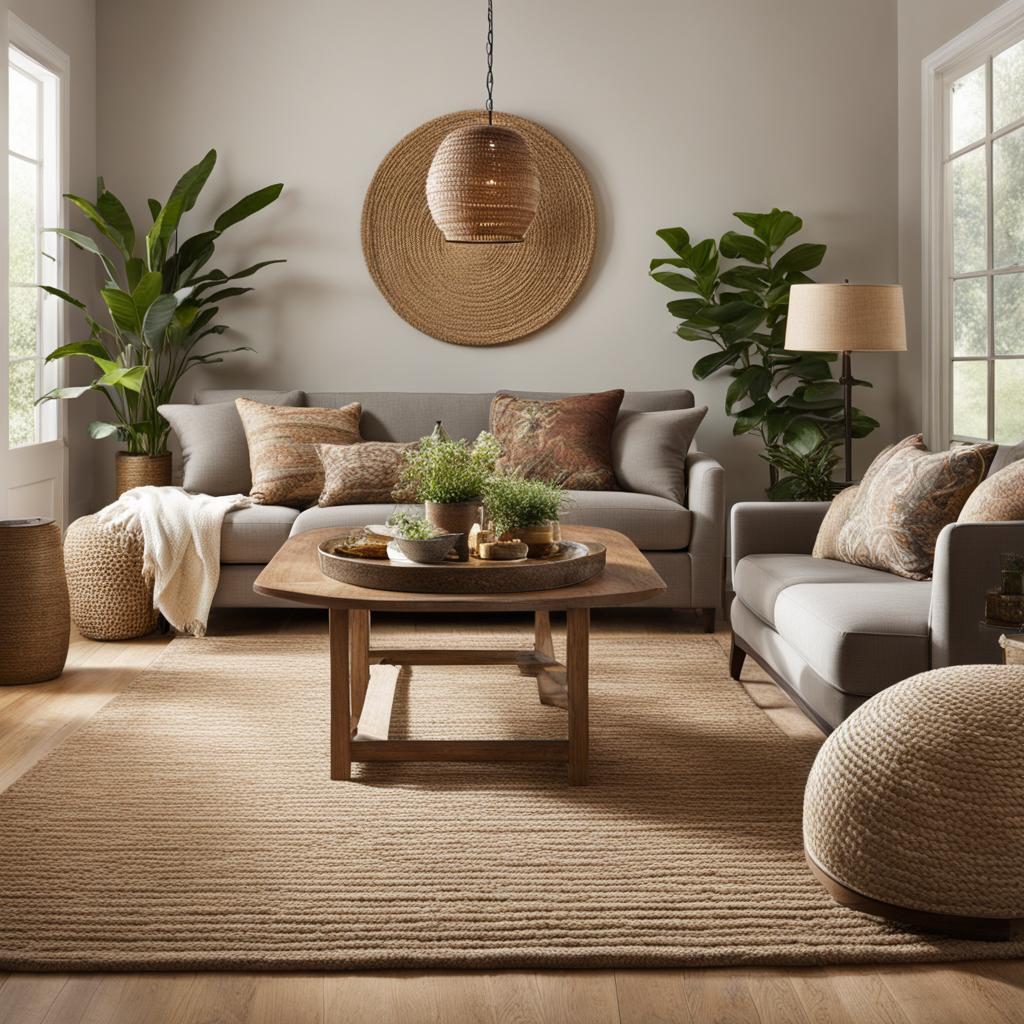
Jute rugs are a popular choice for home decor due to their simplicity, texture, and neutral tones. They can be used with any decorating style, making them a versatile addition to any space. In this article, I will share the top rated jute rugs, providing options that are high-quality, affordable, and eco-friendly. Whether you’re looking for a stylish jute rug for your living room or a durable option for a high traffic area, you’ll find the perfect rug among my top picks.
Here is a sneak peek of what you’ll learn in this article:
Key Takeaways:
- Discover the best jute rugs that offer high quality and durability.
- Find affordable options for a stylish and eco-friendly jute rug.
- Learn how jute rugs can enhance the decor of any room.
- Understand the characteristics and benefits of jute as a natural fiber.
- Get tips on cleaning and maintaining your jute rug for long-lasting beauty.
Now, let’s dive into the world of jute rugs and discover the perfect addition to your home decor.
What is Jute?
Jute is a natural, vegetable fiber that is derived from the inner bark of the jute plant. It is an eco-friendly and sustainable material, as it is 100% biodegradable and recyclable. Jute is often referred to as the “Golden Fiber” due to its golden and silky shine, which adds a touch of warmth and elegance to any space. It is the second most important vegetable fiber after cotton and is widely used in various industries.
Jute is known for its low pesticide and fertilizer needs, making it a more environmentally friendly alternative to other types of fibers. Its cultivation requires minimal water and land, making it a cost-effective and sustainable choice. Jute also has high tensile strength, which makes it suitable for various applications such as the production of industrial yarn, fabric, net, and sacks.
Overall, jute is a versatile and durable fiber that offers a range of benefits. Its bio-degradable and recyclable nature, low pesticide and fertilizer requirements, and high tensile strength make it a popular choice for both environmental and practical reasons.
Table: Comparison of Jute with Other Vegetable Fibers
| Fiber | Biodegradable | Recyclable | Low Pesticide | Low Fertilizer | Tensile Strength |
|---|---|---|---|---|---|
| Jute | Yes | Yes | Yes | Yes | High |
| Cotton | Yes | Yes | No | No | Medium |
| Hemp | Yes | Yes | Yes | Yes | High |
| Flax | Yes | Yes | Yes | Yes | Medium-High |
“Jute is a versatile and eco-friendly fiber with various industrial applications. Its low pesticide and fertilizer requirements, high tensile strength, and recyclable nature make it a sustainable choice for a wide range of products.”
What Does Jute Feel Like?
Jute rugs have a unique texture that adds character to any space. While they may appear rough at first glance, they are actually softer than they seem. The natural fibers of jute give it a wool-like feel, making it a great choice for those who love the cozy comfort of wool but prefer a more sustainable and eco-friendly option.
When walking barefoot on a jute rug, you’ll notice a slight roughness, but it’s not uncomfortable. The texture provides a tactile experience that can be quite pleasing. However, if you’re looking for a rug that is ultra-soft and plush, like a shag rug, then jute may not be the best choice. But when combined with another material like chenille, it can have a softer overall feel.
It’s also worth noting that jute rugs are not as comfortable for napping or lounging on compared to rugs with a plush pile. They are better suited for areas where you’ll be walking or standing, such as living rooms, dining rooms, or entryways. If you’re looking for a rug to add warmth and texture to a space without sacrificing comfort, jute is a fantastic option.
Pros and Cons of Jute’s Texture
Like any material, jute rugs have their pros and cons when it comes to texture. Here are a few key points to consider:
| Pros | Cons |
|---|---|
| Unique and natural texture | Not as soft as plush rugs |
| Cozy and tactile feel | Rough texture may not be suitable for sensitive feet |
| Adds character to any space | Not as comfortable for napping or lounging |
| Eco-friendly and sustainable choice | May require a softer material for added comfort |
“Jute rugs provide a unique texture that adds warmth and character to any room. While they may not be as cozy as plush rugs, their natural and eco-friendly qualities make them a fantastic choice for those who appreciate sustainable home decor.” – Professional Interior Designer
Is Jute a Good Rug Material?
Jute is a great choice for a rug material due to its durability, fade resistance, and ability to absorb sound and heat. Jute rugs can withstand everyday wear and tear, making them suitable for most areas of the home. Whether you have pets, children, or heavy foot traffic, a jute rug will hold up well over time.
Not only are jute rugs durable, but they also have a natural resistance to fading. This means that even with prolonged exposure to sunlight, your jute rug will maintain its color and vibrancy. This makes it a perfect choice for rooms with large windows or high levels of natural light.
Another great benefit of jute rugs is their sound and heat absorbing capabilities. Jute fibers naturally have a high level of thermal insulation, helping to keep your space warm in the winter and cool in the summer. Additionally, the texture of jute rugs helps to absorb sound, reducing echo and creating a more peaceful environment.
Comparing Jute to Other Natural Fiber Rugs
When considering natural fiber rugs, it’s important to compare jute to other options such as sisal. While both jute and sisal rugs are made from natural fibers, there are some key differences to consider. Jute rugs have a softer fiber, making them more suitable for low traffic areas like bedrooms and living rooms. Sisal rugs, on the other hand, have a stiffer fiber and are more durable, making them better suited for high traffic areas such as hallways or entryways.
| Jute Rugs | Sisal Rugs | |
|---|---|---|
| Durability | Durable, but best for low traffic areas | Highly durable, suitable for high traffic areas |
| Fade Resistance | Resistant to fading | Resistant to fading |
| Sound Absorption | Excellent sound absorption | Good sound absorption |
| Heat Absorption | Good heat absorption | Good heat absorption |
Ultimately, the choice between jute and sisal will depend on your specific needs and the amount of traffic in the area where the rug will be placed. For a softer, more comfortable feel, jute is the way to go, while sisal offers exceptional durability in high traffic areas.
Overall, jute is an excellent choice for a rug material due to its durability, fade resistance, and sound and heat absorbing capabilities. Whether you’re looking for a rug for your bedroom, living room, or any other area of your home, a jute rug will provide both style and functionality.
Are Jute Rugs Good for High Traffic Areas?
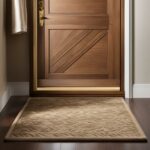
Jute rugs are a popular choice for their natural look and texture, but they may not be the best option for high traffic areas. Due to their softer fiber, jute rugs are not as durable as some other natural rugs and may not withstand heavy foot traffic.
While jute rugs can add warmth and style to low traffic areas like bedrooms and living rooms, they may not hold up well in hallways or entryways where they are exposed to constant wear and tear. The softer fiber of jute rugs is more prone to fraying and damage in high traffic areas.
However, if you still want to incorporate a jute rug in a high traffic area, there are a few steps you can take to make it more durable. Layering a jute rug with a sturdy rug pad can provide added protection and stability. Additionally, opting for a jute rug with a tighter weave or a blend of jute and other fibers can increase its durability.
Table: Comparison of Jute Rugs and Other Natural Rugs for High Traffic Areas
| Rug Material | Durability | Traffic Resistance |
|---|---|---|
| Jute | Fair | Not ideal for high traffic areas |
| Sisal | High | Suitable for high traffic areas |
| Seagrass | Moderate | Can handle moderate foot traffic |
When choosing a rug for high traffic areas, it’s important to consider the specific needs of your space and lifestyle. If durability is a top priority, opting for a rug material like sisal or seagrass may be a better choice. However, if you love the natural look and texture of jute, using it in low traffic areas can still provide a beautiful and cozy addition to your home.
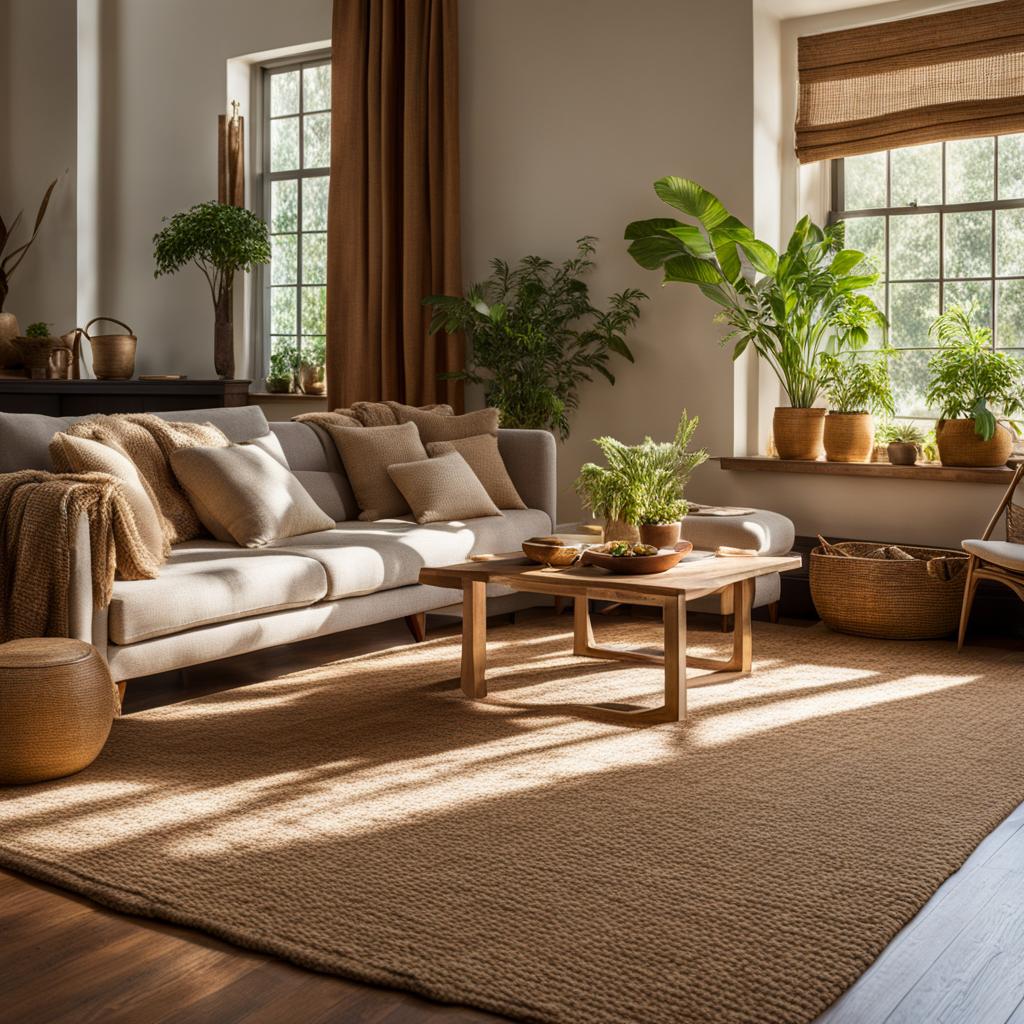
“Jute rugs add warmth and style to low traffic areas, but for high traffic areas, it’s best to choose a rug material that is more durable.” – Interior Design Expert
Do Jute Rugs Require a Pad?
While a pad is not required for a jute rug, it is recommended to prevent the rug from slipping and to provide an extra layer of protection for hardwood floors. A rug pad can also help to extend the life of the rug by providing cushioning and preventing wear and tear.
When placed on hardwood or tile floors, jute rugs can be prone to slipping, especially in high traffic areas. A rug pad helps to keep the rug in place, reducing the risk of accidents and ensuring a safer environment. Additionally, a rug pad provides an additional layer of cushioning, making the rug feel softer underfoot.
Furthermore, using a rug pad can help protect hardwood floors from potential damage caused by the natural rough texture of jute rugs. The pad acts as a barrier, preventing the rug from scratching or leaving marks on the floor surface. This is especially important for homeowners who want to maintain the pristine condition of their hardwood floors.
Table: Benefits of Using a Rug Pad for Jute Rugs
| Benefits | Explanation |
|---|---|
| Prevent Slipping | A rug pad keeps the jute rug in place, reducing the risk of slipping and tripping hazards. |
| Protect Hardwood Floors | The rug pad acts as a barrier, preventing the jute rug from scratching or leaving marks on hardwood floors. |
| Extend Rug’s Lifespan | The cushioning provided by the rug pad helps to absorb impact and reduce wear and tear on the jute rug, increasing its longevity. |
In summary, while not required, using a rug pad for jute rugs is highly recommended. It prevents slipping, protects hardwood floors, and extends the lifespan of the rug. Investing in a rug pad ensures a safer and more durable jute rug that will continue to enhance your space for years to come.
Where Should You Use a Jute Rug?
If you’re considering adding a jute rug to your home decor, it’s important to know where it will work best. Jute rugs are not suitable for humid or moisture-prone areas such as bathrooms, as they can absorb moisture and become mildewed or moldy. However, they are perfect for low traffic areas like bedrooms and living rooms. The natural and neutral tones of jute rugs blend well with any decorating style, adding a touch of warmth and texture to the space.
One popular way to use jute rugs is by layering them with other rugs. Layering rugs adds depth and interest to a room, creating a unique and stylish look. You can experiment with different patterns, textures, and colors to create a personalized and cozy space. Just make sure to choose rugs of varying sizes to create a visually appealing layered effect.
When it comes to jute rugs, it’s all about finding the right balance. While they are not suitable for high traffic areas due to their softer fiber, they can still be a beautiful addition to your home. Consider the function of each room and the amount of foot traffic it receives before deciding to place a jute rug. By choosing the right location for your jute rug, you can enjoy its natural beauty and durability for years to come.
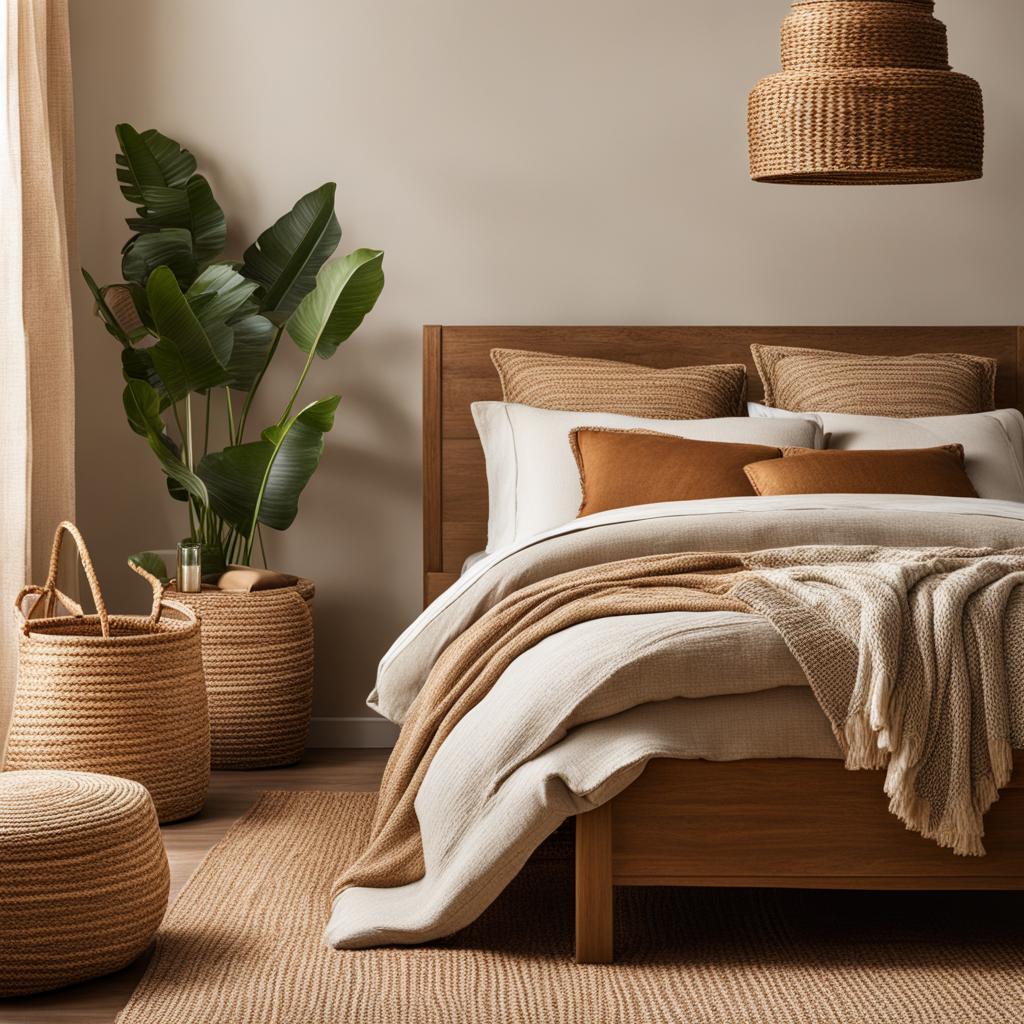
In summary, jute rugs are best used in low traffic areas such as bedrooms and living rooms, where they can add warmth and texture to the space. They are not suitable for humid or moisture-prone areas and should be avoided in bathrooms. Jute rugs can also be layered with other rugs to create a unique and stylish look. By choosing the right location for your jute rug, you can enhance the overall aesthetic of your home and enjoy its natural beauty.
Should You Use a Jute Rug Outdoor?
When considering using a jute rug outdoors, it is important to note that it is not recommended. Jute rugs are prone to moisture-related issues when exposed to the elements. Moisture can cause the rug to become moldy or damaged, leading to a shorter lifespan and potential health hazards.
Although jute rugs are known for their natural and eco-friendly qualities, they are best used indoors where they can be protected from excessive moisture. If you have a covered patio or a screened-in porch, you may be able to use a jute rug in these areas, as long as they are shielded from direct exposure to rain or sun.
When it comes to outdoor areas that are exposed to the elements, such as open decks or garden spaces, it is advisable to choose a rug made from synthetic or weather-resistant materials. These rugs are specifically designed to withstand the challenges of outdoor use, including moisture, UV rays, and heavy foot traffic.
In summary, while jute rugs are a popular choice for indoor spaces due to their natural beauty and eco-friendly properties, they are not recommended for outdoor use. To ensure the longevity and performance of your rugs, it is best to select materials specifically designed for outdoor environments.
How Do You Clean a Jute Rug?
When it comes to cleaning a jute rug, regular maintenance is key to keeping it looking its best. Here are some simple steps you can follow to keep your jute rug clean and in great condition:
- Vacuuming: Use a vacuum cleaner with a brush attachment to gently remove surface dirt and debris from your jute rug. Regular vacuuming will help prevent the accumulation of dirt and keep your rug looking fresh.
- Spot cleaning: For spills or stains, it’s important to act quickly. Blot the stain with a clean cloth to remove as much liquid as possible. Then, mix a small amount of mild soap with water and gently dab the stain. Avoid rubbing, as this can cause the stain to spread. Blot the area with a clean, damp cloth to remove the soap residue.
- Weekly cleanings: In addition to regular vacuuming, it’s a good idea to give your jute rug a thorough cleaning once a week. Fill a bucket with lukewarm water and a small amount of mild soap. Dip a soft-bristled brush into the soapy water and gently scrub the rug in a circular motion. Rinse the brush frequently to avoid reapplying dirt.
- Rug rotation: To ensure even wear, rotate your jute rug every few months. This will help prevent certain areas from getting more traffic than others, prolonging the life of your rug.
By following these simple cleaning steps, you can keep your jute rug looking fresh and beautiful for years to come. Remember to always check the manufacturer’s cleaning instructions for specific care recommendations based on the type and quality of your jute rug.
“Regular vacuuming and spot cleaning are essential for keeping your jute rug clean and well-maintained. By taking the time to care for your rug properly, you can enjoy its natural beauty and durability for many years to come.” – Professional Cleaning Expert
How Do You Clean a Jute Rug Pet Stain?
If you have a pet, accidents happen, and cleaning up pet stains promptly is essential to prevent permanent damage to your jute rug. Here are some steps to effectively clean a pet stain:
- Immediate Cleaning: It’s important to clean up the pet stain as soon as you notice it. Blot the stain gently with a clean cloth or paper towel to remove as much of the urine or stain as possible.
- White Vinegar and Warm Water: Create a cleaning solution by mixing equal parts white vinegar and warm water. Blot the stained area with this solution, using a clean cloth or sponge. Vinegar helps neutralize the odor and remove any remaining stain.
- Baking Soda: Sprinkle baking soda on the affected area to absorb any remaining moisture and reduce odor. Let it sit overnight or for a few hours, then vacuum it up.
- Vacuuming: After the baking soda has done its job, thoroughly vacuum the jute rug to remove any remaining residue and restore its texture.
It’s important to note that jute rugs are not stain-resistant, so immediate cleaning is crucial to prevent the stain from setting. Following these steps will help ensure that your jute rug stays clean and fresh, even in the face of pet accidents.
Tips for Preventing Pet Stains on Jute Rugs
While accidents can happen, there are a few steps you can take to minimize the risk of pet stains on your jute rug:
- Consider using a pet-friendly rug pad underneath your jute rug. This can provide an extra layer of protection and prevent liquid from seeping into the rug fibers.
- Train your pets to use designated potty areas to minimize accidents on your rugs.
- Regularly clean and groom your pets to reduce shedding and the likelihood of accidents.
- Keep an eye on your pets and their behavior to catch accidents early and clean them promptly.
By taking these preventative measures and promptly cleaning up pet stains, you can enjoy the beauty and durability of your jute rug while keeping it clean and fresh.
Can You Steam Clean a Jute Rug?
Steam cleaning is a popular method for deep cleaning carpets and rugs, but when it comes to jute rugs, it’s not advisable. Jute rugs have a natural tendency to retain moisture, and steam cleaning can exacerbate this issue. The moisture from steam cleaning can penetrate deep into the fibers of the rug and take a long time to dry, leading to potential mold or damage.
It’s best to avoid steam cleaning jute rugs and opt for dry cleaning methods instead. Regular vacuuming is the most effective way to remove surface dirt and debris from a jute rug. For spot cleaning, you can use a mixture of mild soap and water, being careful not to use harsh cleaning agents that may cause discoloration. Blot the stain gently with a clean cloth and allow the area to air dry.
Steam cleaning is not advisable for jute rugs as the moisture can cause the rug to retain moisture and possibly lead to mold or damage. It is best to stick to dry cleaning methods for jute rugs.
Remember to be gentle when cleaning a jute rug, as the fibers can be delicate. Avoid scrubbing or rubbing the rug vigorously, as this can damage the fibers and cause fraying. If you’re unsure about how to clean your jute rug, it’s always a good idea to consult the manufacturer’s care instructions or seek professional advice.
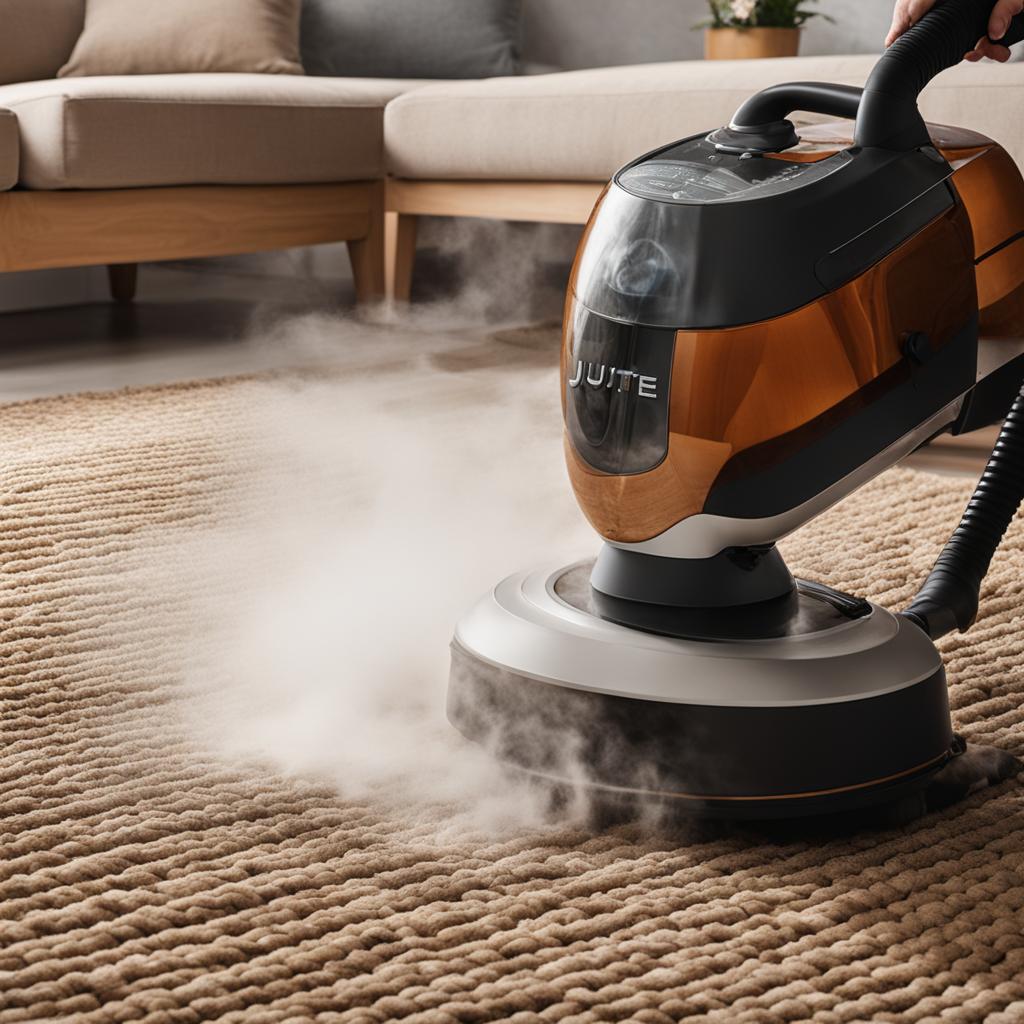
Table: Comparison of Cleaning Methods for Jute Rugs
| Cleaning Method | Advantages | Disadvantages |
|---|---|---|
| Dry Cleaning | – Safe for jute rugs – Does not introduce excess moisture – Suitable for regular maintenance |
– May not remove deep-set stains – Limited effectiveness for heavy soiling |
| Spot Cleaning with Soap and Water | – Effective for removing small stains – Gentle on jute fibers |
– May cause discoloration if not properly diluted – Requires blotting and air drying |
| Steam Cleaning | – Offers deep cleaning for other types of rugs | – Risk of moisture retention in jute fibers – Potential for mold or damage – Not recommended for jute rugs |
As the table above demonstrates, dry cleaning and spot cleaning with soap and water are the preferred methods for cleaning jute rugs. These methods are gentle on the fibers and minimize the risk of moisture retention, ensuring the longevity and beauty of your jute rug.
Dealing with Jute Rug Smells
If you’ve recently purchased a jute rug, you may notice a slight odor when you unroll it. This is completely normal and is a result of the rug being packed up for a period of time. Luckily, there are simple ways to eliminate any lingering smells and freshen up your jute rug.
A great method for dealing with jute rug smells is to use baking soda. Baking soda is a natural odor absorber and can help to neutralize any unpleasant smells. Simply sprinkle a generous amount of baking soda over the rug and let it sit for several hours or overnight. The baking soda will work to absorb any odors, leaving your rug smelling fresh and clean.
After allowing the baking soda to sit, it’s time to freshen up the rug. Use a vacuum cleaner with a brush attachment to thoroughly vacuum the rug, ensuring that all the baking soda is removed. This will leave your jute rug looking clean and smelling great.
By following these simple steps, you can easily eliminate any odors from your jute rug and enjoy a fresh and inviting living space. Remember to regularly vacuum your rug to keep it looking its best and to prevent any future smells from developing. With a little bit of care, your jute rug will continue to add style and warmth to your home for years to come.
Related Products
- Jute rug cleaner spray: A specially formulated spray designed to eliminate odors and refresh jute rugs.
- Jute rug deodorizer: An all-natural deodorizer that helps to neutralize odors and keep your jute rug smelling fresh.
- Jute rug freshening powder: Similar to baking soda, but specially formulated for jute rugs, this powder absorbs odors and leaves your rug smelling clean.
These products can be found at home goods stores or online, and can be a convenient solution for keeping your jute rug smelling fresh between cleanings. Remember to always follow the instructions on the product label for best results.
Summary
Dealing with jute rug smells is a simple task that can be easily accomplished with the help of baking soda. Sprinkling baking soda over your rug, letting it sit, and then vacuuming it up will eliminate any odors and leave your jute rug smelling fresh. Additionally, there are specialized products available that can help to keep your jute rug smelling great between cleanings. Regular care and maintenance will ensure that your jute rug continues to add beauty and warmth to your home for years to come.
Are Jute Rugs Affordable?
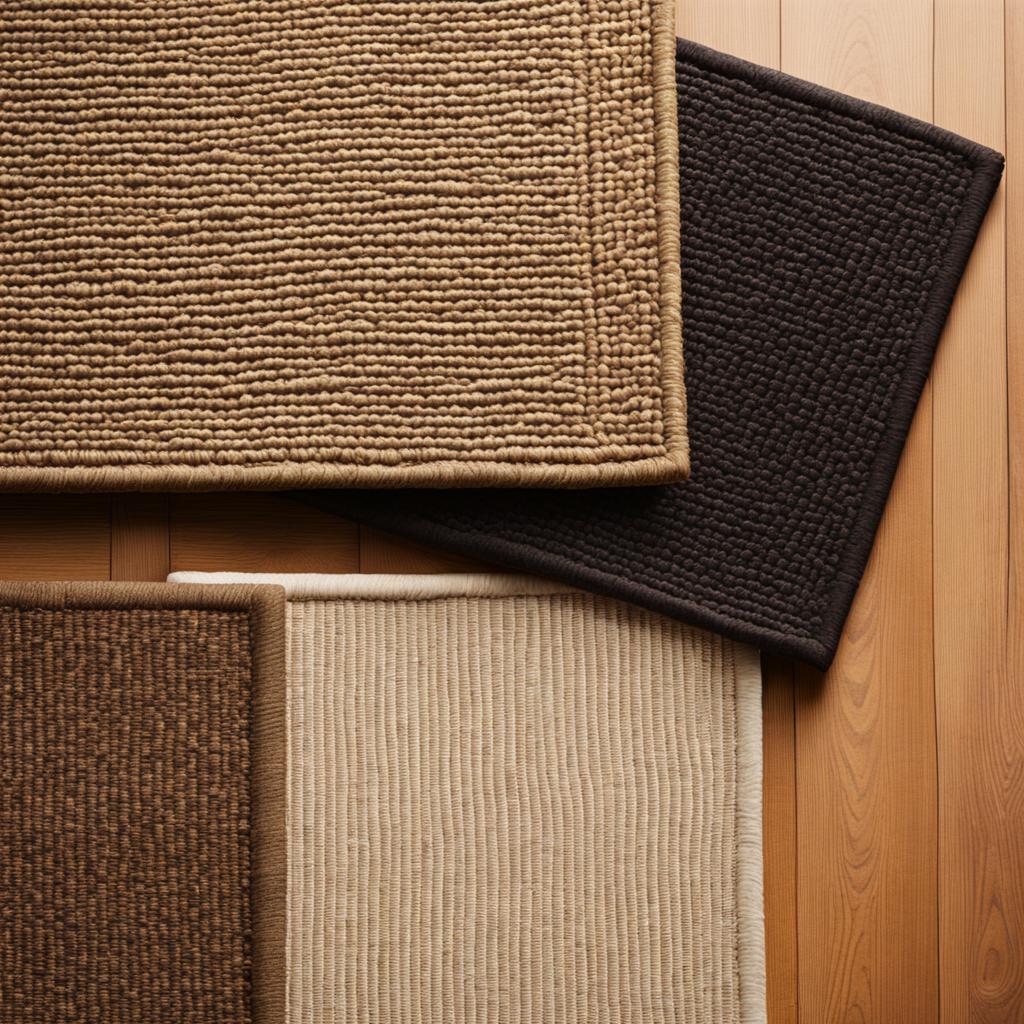
Jute rugs are a budget-friendly option for those looking to add a touch of natural beauty to their home decor. With prices that cater to various budgets, there is a jute rug for everyone. Retailers like Ikea offer affordable options that are both stylish and durable. For those seeking a more high-end jute rug, Pottery Barn provides a range of options with premium quality craftsmanship.
When it comes to price variation, the cost of a jute rug can depend on factors such as size, quality, and brand. Larger rugs will naturally be more expensive, while smaller ones offer a more affordable choice. The quality of the jute fibers used in the rug will also play a role in the price, with higher quality rugs being more expensive.
To give you an idea of the price range, an Ikea jute rug can start as low as $30 for a smaller size, while a Pottery Barn jute rug can range from $150 to $500 or more, depending on the size and design. It’s important to consider your budget and choose a jute rug that fits your needs and style preferences.
| Brand | Price Range |
|---|---|
| Ikea | $30 – $100+ |
| Pottery Barn | $150 – $500+ |
Jute Backing vs. Sisal
Jute rugs and sisal rugs are both popular choices for natural fiber rugs, but there are some key differences between the two. Understanding these differences can help you make an informed decision when choosing the right rug for your space.
Jute Backing
Jute rugs are made from jute plants and have a softer fiber compared to sisal rugs. The jute backing provides a comfortable and plush feel underfoot. Jute rugs are ideal for low traffic areas like bedrooms and living rooms where you want to add warmth and texture to the space.
Sisal Rugs
On the other hand, sisal rugs are made from the agave plant and have a stiffer fiber. They are more durable and suitable for high traffic areas like hallways and entryways. Sisal rugs can withstand heavy foot traffic and are less likely to show signs of wear and tear.
| Jute Rugs | Sisal Rugs |
|---|---|
| Softer fiber | Stiffer fiber |
| Ideal for low traffic areas | Suitable for high traffic areas |
| Provides plush feel | Durable and less likely to show signs of wear and tear |
When deciding between jute and sisal rugs, consider the level of foot traffic in your space and the desired feel underfoot. If you’re looking for a softer and more comfortable rug for a low traffic area, jute rugs are a great choice. On the other hand, if you need a rug that can withstand heavy use in a high traffic area, sisal rugs are a better option. Ultimately, the choice between jute and sisal rugs depends on your specific needs and preferences.
Why Jute Rugs are the Perfect Minimalist Piece of Decor
If you’re a fan of minimalist design, then jute rugs are the perfect addition to your home decor. Their natural look and softening effect bring warmth and texture to a space without overpowering its simplicity. Jute rugs complement minimalist styles by adding subtle visual interest and a touch of organic charm. With their neutral tones and woven texture, they seamlessly blend into any minimalist setting, creating a harmonious and balanced environment.
One of the key benefits of jute rugs for minimalist design is their budget-friendly nature. Compared to other types of rugs, jute rugs are often more affordable, making them an ideal choice for cost-conscious homeowners. You can achieve a stylish and polished look without breaking the bank.
When it comes to versatility, jute rugs are a winner. They can be used in various areas of the home, from living rooms to bedrooms and even dining spaces. Their natural fibers and earthy tones create a calming and soothing atmosphere, perfect for creating a minimalist oasis.
So, if you’re looking for a budget-friendly, natural, and versatile piece of decor to enhance your minimalist space, look no further than jute rugs. Their natural look and softening effect will bring warmth and texture to your home, creating a stylish and inviting atmosphere that perfectly complements your minimalist design.
Conclusion
In conclusion, the best jute rugs are the top picks for versatile decor in any home. These rugs offer a natural and minimalist look that can enhance the aesthetic of any space. With their affordability and durability, jute rugs are the perfect choice for homeowners looking for an eco-friendly and budget-friendly option.
When selecting a jute rug, consider factors such as size, durability, and price. Look for high-quality options that will withstand everyday wear and tear while maintaining their appearance over time. Whether you need a stylish rug for your living room or a cozy addition to your bedroom, there are plenty of affordable jute rug options available.
With their ability to complement any decorating style and add warmth and texture to a room, jute rugs are a versatile decor choice. They can soften the overall look of a space while providing a cozy and inviting feel. Whether you prefer a minimalist design or a more eclectic style, a jute rug can be the perfect finishing touch.
In summary, jute rugs are the best choice for those seeking affordable, durable, and versatile decor options. With their natural look and ability to enhance any space, jute rugs are a top pick for homeowners. Consider the size, durability, and price when selecting the best jute rug for your home, and enjoy the texture and warmth it brings to your living space.
FAQ
What is jute?
Jute is a vegetable fiber that is 100% biodegradable and recyclable. It is known as the “Golden Fiber” due to its golden and silky shine. It is the second most important vegetable fiber after cotton and is widely used in various industries.
What does jute feel like?
Jute rugs have a rough texture but are softer than they appear. They have a feel similar to wool, although not as soft as a shag rug. When combined with another material such as chenille, jute rugs can have a softer overall feel.
Is jute a good rug material?
Yes, jute is a good rug material as it is fairly durable, fade resistant, and has sound and heat absorbing capabilities. It can withstand everyday wear and tear and is suitable for most areas of the home. Jute rugs are known for their longevity and ability to maintain their appearance over time.
Are jute rugs good for high traffic areas?
Jute rugs are not ideal for high traffic areas such as hallways or entryways. Due to their softer fiber, they are not as durable as some other natural rugs. They are best suited for low traffic areas like bedrooms and living rooms.
Do jute rugs require a pad?
While a pad is not required for a jute rug, it is recommended to prevent the rug from slipping and to provide an extra layer of protection for hardwood floors. A rug pad can also help to extend the life of the rug by providing cushioning and preventing wear and tear.
Where should you use a jute rug?
Jute rugs are not suitable for humid or moisture-prone areas such as bathrooms, as they can absorb moisture and become mildewed or moldy. They are best used in low traffic areas like bedrooms and living rooms. Another popular way to use jute rugs is by layering them with other rugs to add texture and interest to a space.
Should you use a jute rug outdoors?
Jute rugs are not recommended for outdoor use as they are prone to moisture-related issues. Exposure to the elements can cause the rug to become moldy or damaged. It is best to use jute rugs indoors where they can be protected from moisture.
How do you clean a jute rug?
Jute rugs can be cleaned by regular vacuuming to remove surface dirt and debris. For spot cleaning, it is best to use a mixture of soap and water, avoiding harsh spot cleaners that may cause discoloration. It is recommended to rotate the rug every few months to prevent wear and tear in the same spots.
How do you clean a jute rug pet stain?
It is important to clean pet stains on a jute rug immediately to prevent the stain from setting. A mixture of equal parts white vinegar and warm water can be used to blot the stain, followed by a dry cloth to soak up any remaining moisture. Sprinkling baking soda on the stain can help absorb moisture and reduce odor. After letting the baking soda sit overnight, it can be vacuumed up.
Can you steam clean a jute rug?
Steam cleaning is not advisable for jute rugs as the moisture can cause the rug to retain moisture and possibly lead to mold or damage. It is best to stick to dry cleaning methods for jute rugs.
How do you deal with jute rug smells?
Jute rugs may have an initial smell due to being rolled up for a while. Sprinkling baking soda on the rug and letting it sit for a while can help absorb any odors. Vacuuming the baking soda will freshen up the rug and eliminate any lingering smells.
Are jute rugs affordable?
Jute rugs are generally affordable, although prices may vary depending on where you purchase them. Retailers like Ikea offer budget-friendly options, while higher-end brands like Pottery Barn offer more expensive jute rugs. The price of a jute rug depends on factors such as size, quality, and brand.
Jute backing vs. sisal?
Jute and sisal rugs are both popular choices for natural fiber rugs. However, there are some key differences between the two. Jute rugs are made from jute plants and have a softer fiber, making them suitable for lighter traffic areas. Sisal rugs, on the other hand, are made from the agave plant and have a stiffer fiber. They are more durable and suitable for high traffic areas like hallways and entryways.
Why are jute rugs the perfect minimalist piece of decor?
Jute rugs are the perfect minimalist piece of decor due to their natural look and ability to soften a space. They complement minimalist design styles and add warmth and texture without overpowering the simplicity of the space. Additionally, jute rugs are budget-friendly, making them a practical choice for minimalist homeowners.